65 / 249
Ghana
The Confidence of Cultural Memory
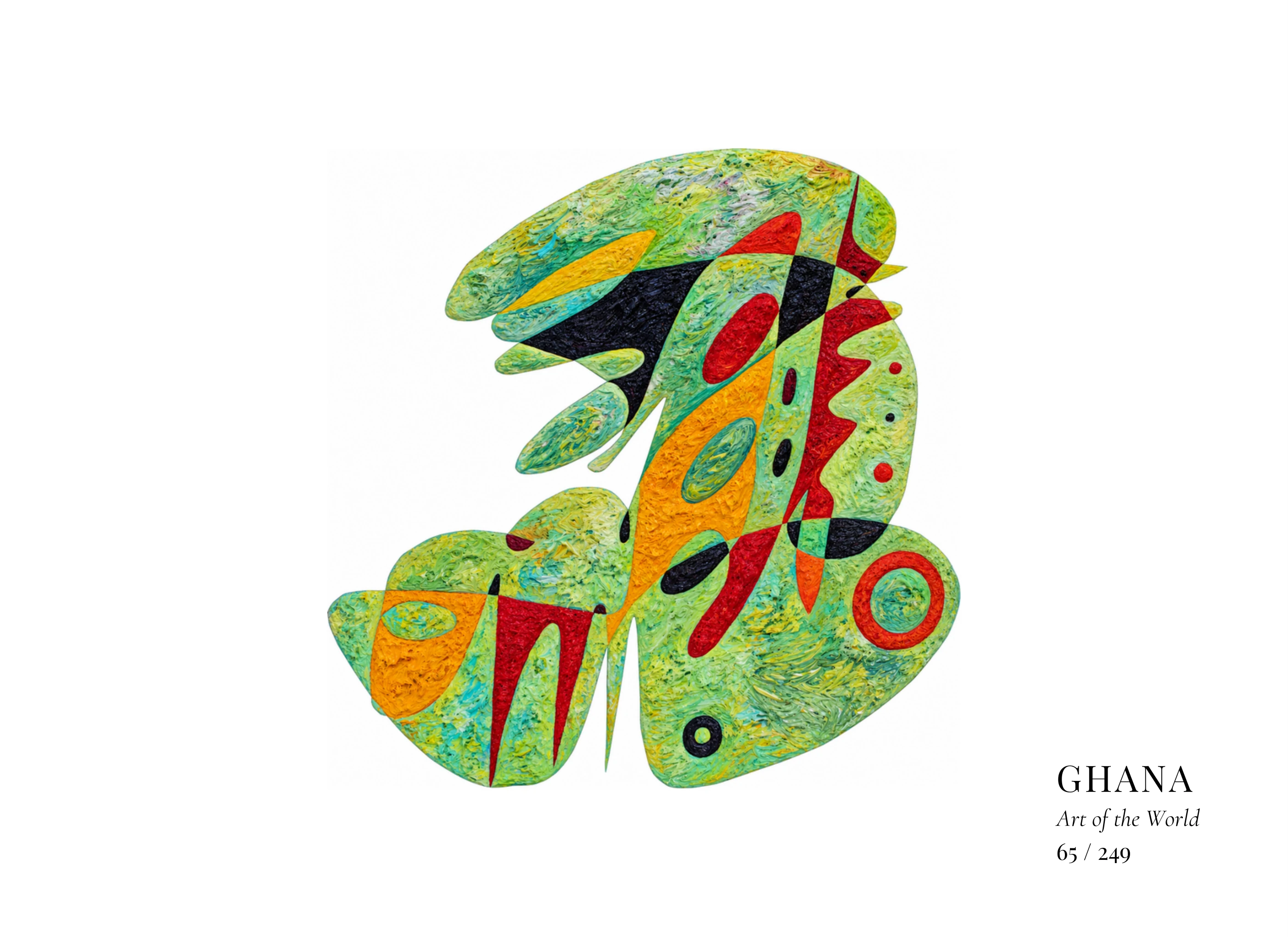
Description
The visual field brings green, gold, red and black into a dense architecture of interlocking forms. Sweeping curves, elongated ovals and angular fragments gather around a strong vertical structure, while detached circular accents create openness. Its vivid contrasts and textured surface suggest confidence and movement, evoking Ghana as historically grounded, culturally plural and continually extending its creative influence.
Cultural Context
Ghana carries a distinguished history of statecraft, trade and artistic achievement. Akan kingdoms, the Asante state and northern traditions including Dagbon contributed to a rich political and cultural inheritance. In 1957, Ghana became the first sub-Saharan African colony to gain independence from European colonial rule in the twentieth century, giving powerful momentum to wider African independence movements.
Akan, Ewe, Ga-Dangme, Mole-Dagbani and many other communities enrich its cultural identity. Kente weaving, Adinkra traditions, goldwork, carved stools, architecture, literature and ceremonial arts express memory and belonging. Highlife, contemporary music, film and visual art extend Ghanaian creativity internationally, while Accra has become an important meeting place for African and diasporic cultural exchange.
Exhibition Context
Green and yellow broad shapes fold around red eyes and a body divided into repeated sections. Ghana's Akan, Asante and northern histories complicate any idea of a nation beginning only with colonial independence in 1957. Here a many-part figure seems already substantial before one finds its face. The patterned divisions may suggest accumulated political forms; the outward-looking eyes keep the portrait alive in the present rather than sealed in a historical display case.