100 / 249
Libya
Between Desert and Sea
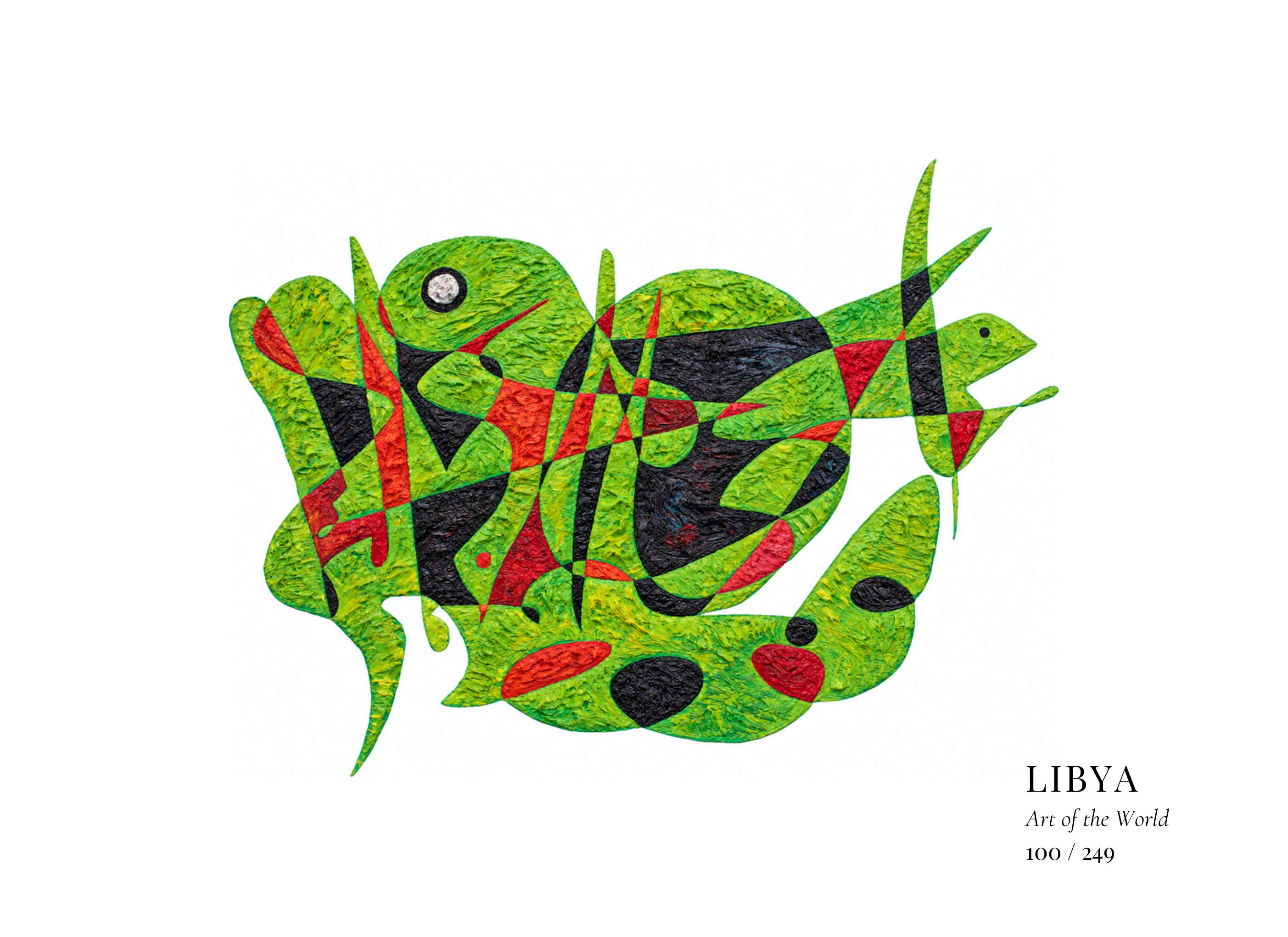
Description
Its richly worked surface transforms colour into a physical architecture. Individual components remain clearly defined but cannot be separated from the larger structure—a reflection of Libya’s identity as an accumulation of cultures, routes and historical worlds. The composition presents the country through endurance and possibility: ancient in memory, expansive in scale and sustained by the capacity for renewal.
Cultural Context
Libya occupies a vast meeting place between the Mediterranean and the Sahara. Across this territory, ancient coastal cities, desert kingdoms and trans-Saharan routes connected North Africa with the wider worlds of Africa, Europe and the Middle East.
The remains of Cyrene and Leptis Magna testify to Libya’s importance within classical civilization, while the Garamantes transformed the desert through sophisticated settlements and water systems. Amazigh, Arab, Tuareg and Tebu traditions continue this layered inheritance, preserving distinct languages, artistic forms and relationships with the land.
The portrait is animated by a vibrant green field through which black structures and red accents move with commanding precision. Organic contours merge with geometric divisions, creating a continuous visual current. The dark passages provide depth and stability; concentrated red forms introduce energy and decisive points of emphasis.