28 / 249
Niger
The River Through the Desert
Description
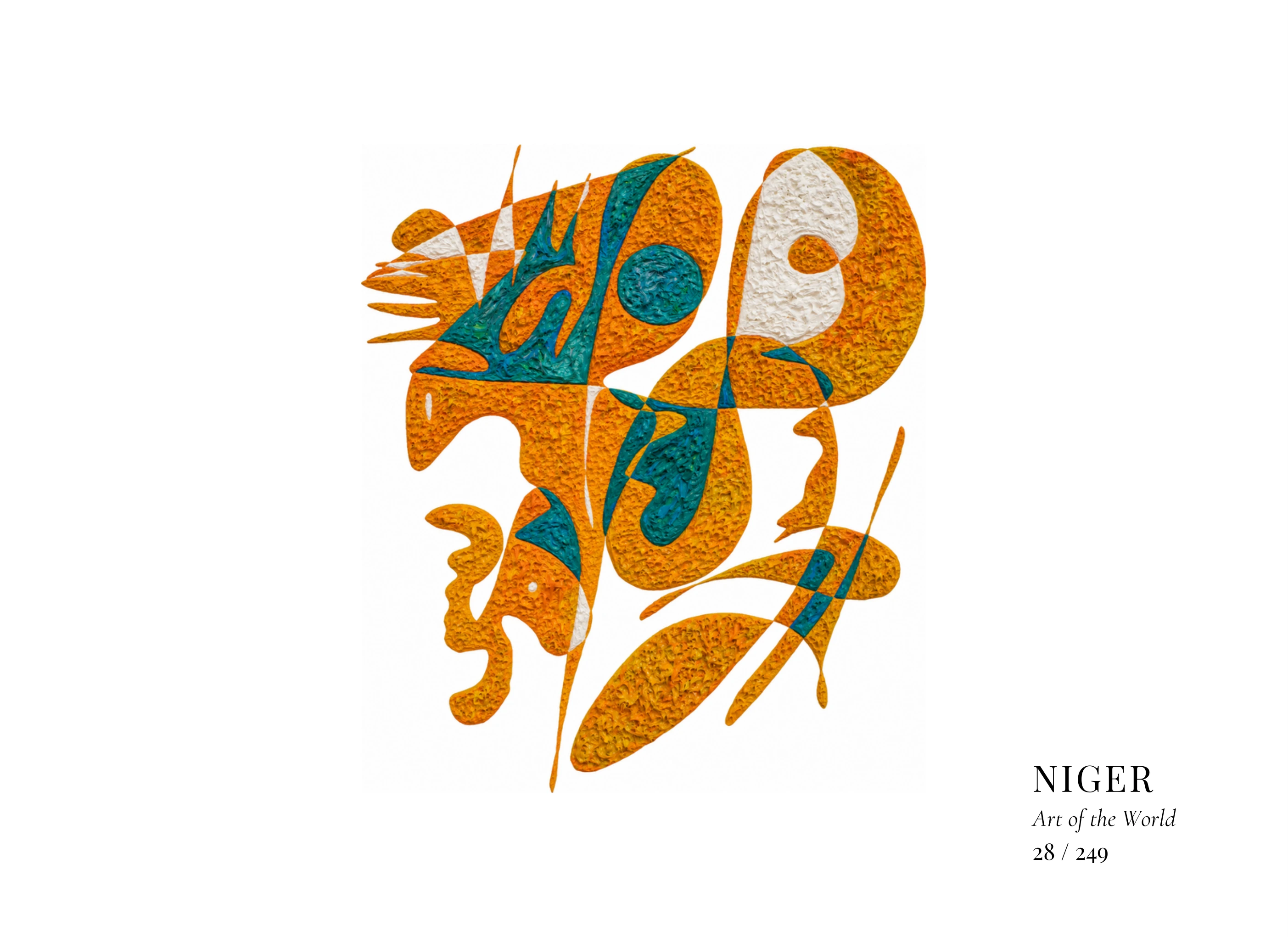
The composition is dominated by ochre and gold, colours that evoke sand, sunlight and the warmth of earthen settlements. Deep teal-green forms move through the image like water, vegetation or routes traced across an arid landscape. White passages introduce light and spiritual openness. The composition appears to gather animals, vessels and human presences into one shifting structure, presenting Niger as a place where movement creates connection and where life continually reorganizes itself around scarce but essential sources of renewal.
Cultural Context
Niger extends across the Sahara and the Sahel, yet its historical life has been shaped by movement rather than emptiness. Trans- Saharan routes connected communities, markets and centres of learning, while the Niger River supported agriculture, settlement and exchange in the southwest. Agadez became an important crossroads between desert caravans and the civilizations of West Africa.
The country’s identity is carried by Hausa, Zarma-Songhai, Tuareg, Fulani, Kanuri, Toubou and other communities. Oral history, music, metalwork, leatherwork, weaving and earthen architecture preserve knowledge adapted to very different environments. Nomadic traditions coexist with river cultures and urban marketplaces, creating a society whose heritage depends upon mobility, negotiation and resilience.