41 / 249
The Gambia
A Country Shaped by a River
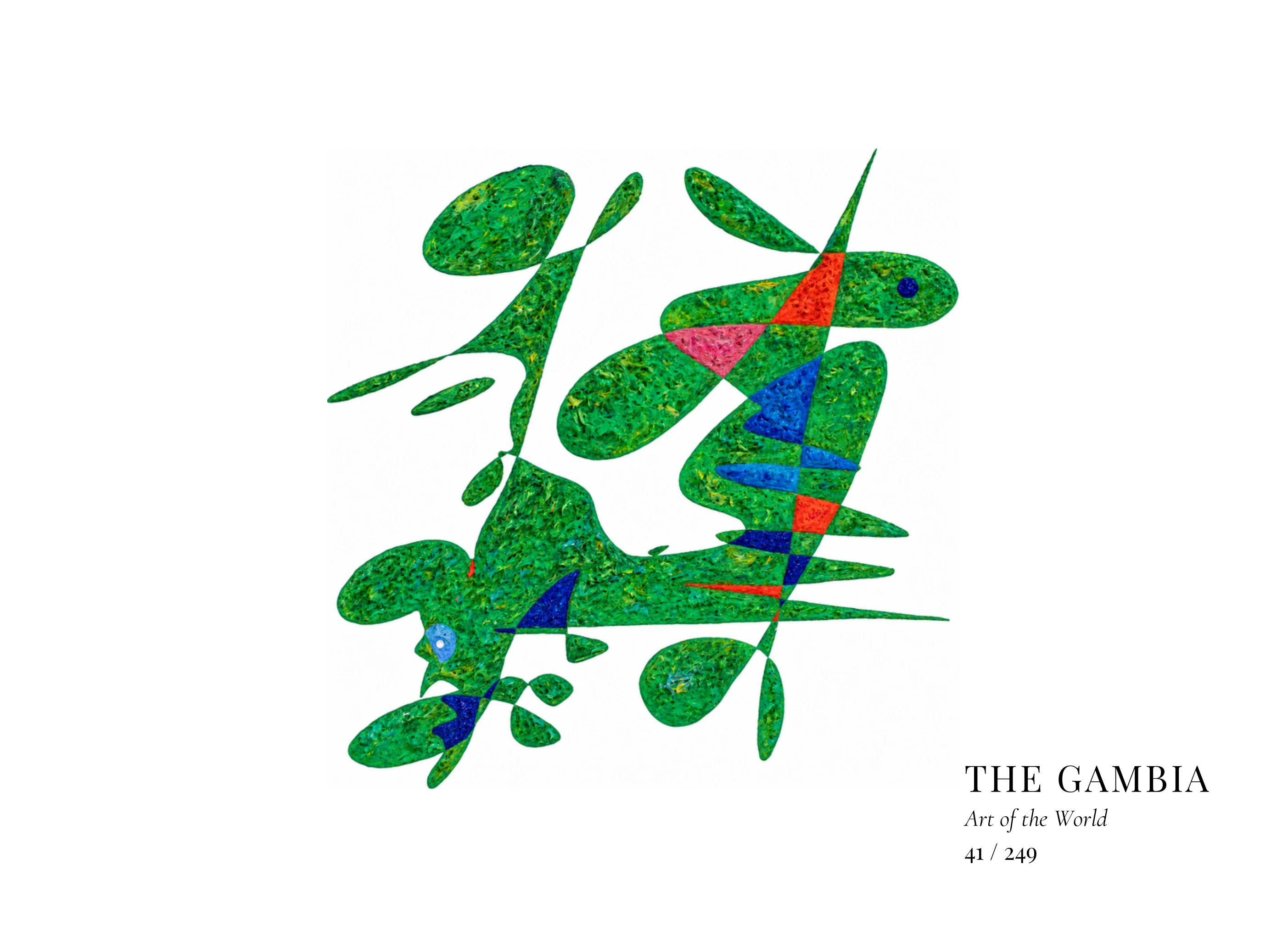
Artist: Gheorghe Virtosu
Catalogue: Art of the World
Catalogue Nr: 041/249
Source of Print: Excerpt from Divine DNA, 2016 (oil on canvas)
Medium: Limited Edition Print
Edition: 1/1
Authentication: Approved and signed by the artist on the reverse.
Artwork Classification: Civilisational Portraiture
Part of Art of the World, an El Arte Monumental project exploring contemporary art, cultural identity and visual memory.
Description
The composition's dominant green establishes a sense of organic continuity, enlivened by blue, red and pink. Long horizontal and vertical elements carry movement across the dense surface, while rounded volumes meet precise triangular forms. This interconnected geometry suggests the river’s unifying presence, allowing the composition to evoke The Gambia as a living current: intimate in scale, culturally rich and connected through shared memory.
Cultural Context
The Gambia follows the river from which it takes its name, extending inland from the Atlantic through the surrounding landscapes of West Africa. The river has long connected settlements, agriculture and trading communities, shaping a country whose geography is defined by movement and exchange. Independence from British rule came in 1965.
Mandinka, Fula, Wolof, Jola, Serahule and other communities contribute to a closely interwoven cultural life. The jali, or griot, tradition preserves history and genealogy through narrative and music, while the kora gives this inheritance one of its most celebrated expressions. Craftsmanship, dance and oral traditions further sustain communal memory.
Exhibition Context
Long green forms joined by red and blue passages run laterally across the page, with smaller growths branching from them. The Gambia's shape along its river offers a particularly persuasive geographical reading: the painting's extended spine feels like a route supporting many neighbouring settlements. River travel, trade and colonial borders all touched that corridor. The artwork is no survey map, but the tension between a narrow through-line and varied side branches makes place and history visible together.