91 / 249
Bhutan
Kingdom Above the Valleys
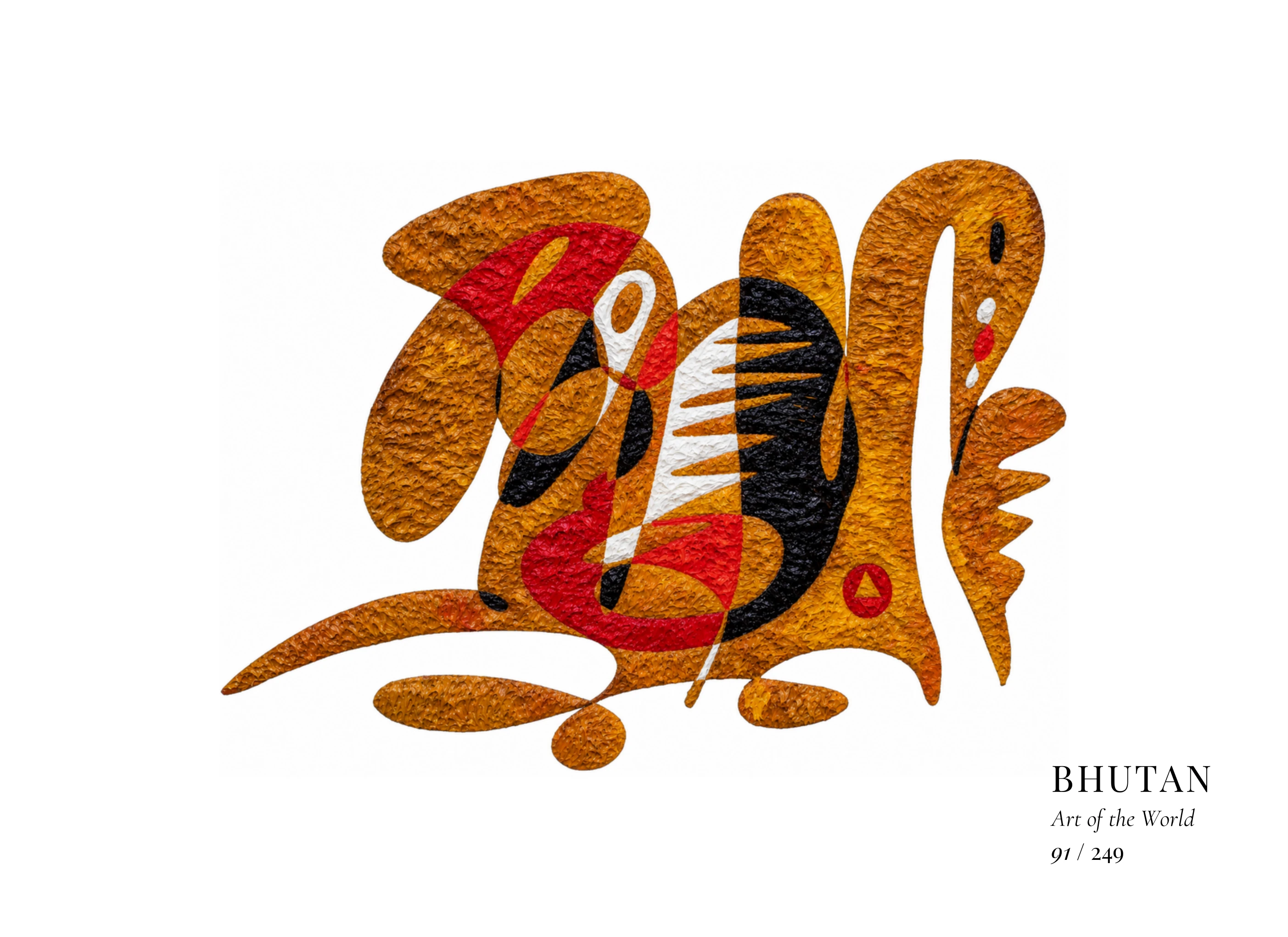
Description
The artwork is dominated by golden ochre, black, red and white, organised through a dense vertical structure. Rounded forms intersect with sharp extensions, striped passages and circular openings, while thick impasto gives the surface an almost carved physicality. Dark elements provide strong internal anchors against warmer colour fields. The composition suggests a balance between enclosure and movement, its interlocking forms evoking cultural continuity within a mountainous landscape shaped by distinct valleys and enduring traditions.
Cultural Context
Bhutan lies in the eastern Himalayas between India and China, rising from subtropical foothills to some of the world’s highest mountain landscapes. Its political identity developed through Buddhist institutions and regional communities before unification in the seventeenth century. The Wangchuck monarchy was established in 1907, and Bhutan has since pursued gradual modernisation while maintaining strong cultural and environmental protections.
Bhutanese identity is deeply influenced by Vajrayana Buddhism. Dzongkha is the national language, alongside numerous regional languages. Fortress-monasteries known as dzongs, Buddhist temples, mural painting, sculpture, weaving, woodcarving and ceremonial dance create a distinctive visual culture. Textiles are particularly important, combining complex geometry, brilliant colour and highly developed weaving traditions.
Exhibition Context
Ochre shapes rise on either side of a pale, ribbed middle, suggesting a creature yet withholding a clear dragon's head or tail. Bhutan's dragon is familiar from its flag, so the possible association deserves attention, but resemblance alone does not confirm it. The country's Himalayan Buddhist kingdom and long preservation of sovereignty give the poised, almost heraldic arrangement historical depth. The painting's power is that the emblem remains on the verge of becoming animate, between ornament, landscape and living body.