6 / 249
Hong Kong
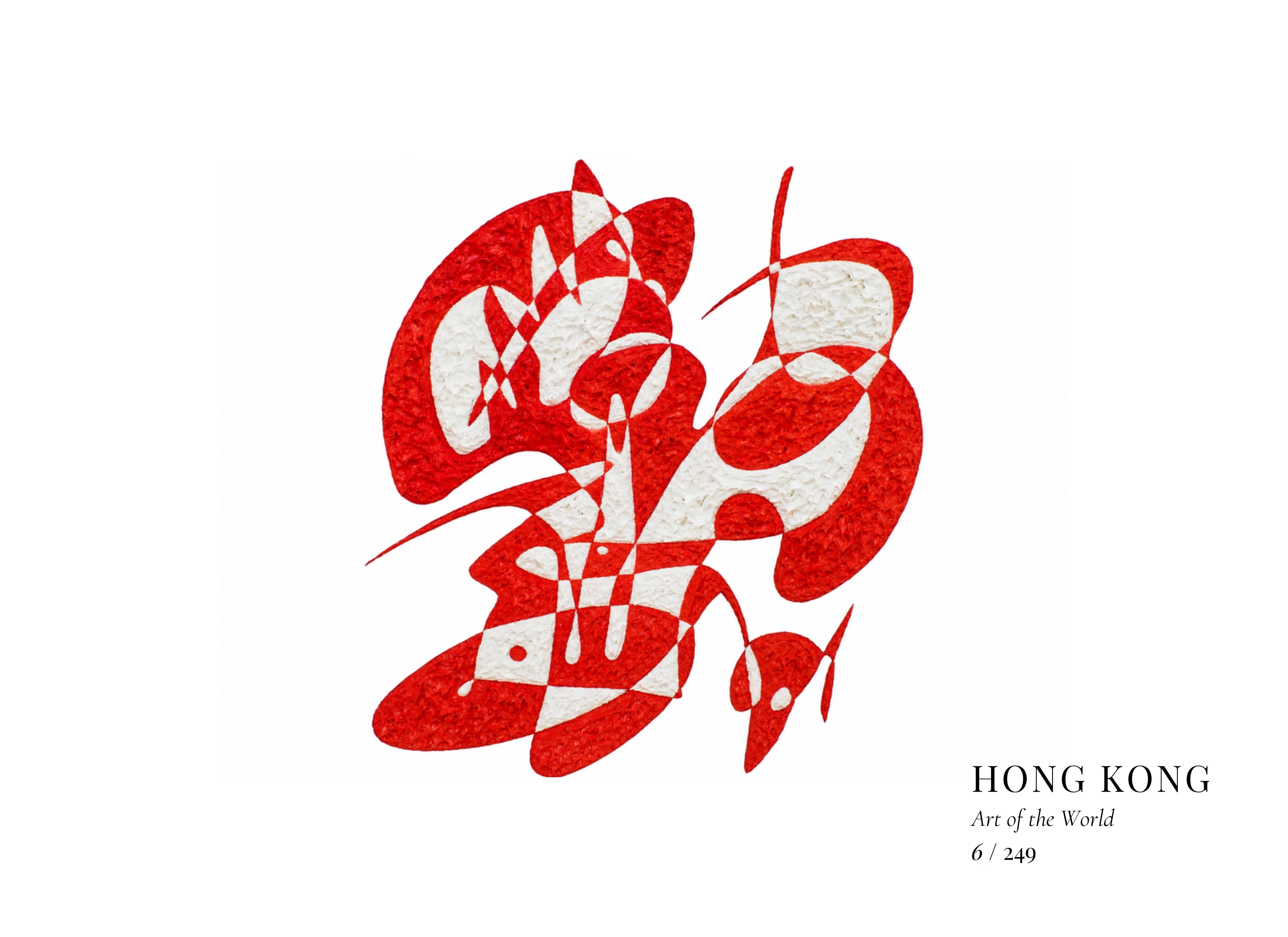
Harbour of Intersections
Description
The artwork concentrates almost entirely on red and white, producing an immediate rhythm of contrast. Thick impasto gives both colours a vigorous, tactile surface, while the composition divides into several irregular interconnected masses. Curved enclosures, pointed projections and narrow crossing lines create continuous directional movement, interrupted by expanses of untouched white. A small detached form at the lower right establishes a separate visual pulse while remaining connected through colour and geometry. The work suggests density without rigidity: multiple forms collide, overlap and open outward, evoking Hong Kong’s compressed geography, restless circulation and layered cultural life.
Cultural Context
Hong Kong occupies a mountainous coastal territory on the South China Sea, where islands, sheltered waters and a deep natural harbour shaped centuries of maritime exchange. Long connected to southern Chinese society and trade, it became a British colony in the nineteenth century before returning to Chinese sovereignty in 1997 as a Special Administrative Region. Its modern identity emerged through intense urbanisation, migration, commerce and continual movement between local, Chinese and international worlds.
Cantonese language and culture remain fundamental to Hong Kong’s character. Traditional festivals, temples, ancestral practices and regional cuisine coexist with a highly developed metropolitan culture. Cantonese opera, martial-arts traditions, Cantopop, architecture, graphic design and especially Hong Kong cinema have carried its cultural influence far beyond its territory. The city’s visual identity often reflects the compression of old and new within an exceptionally dense urban environment.