105 / 249
Indonesia
Archipelago of Many Currents
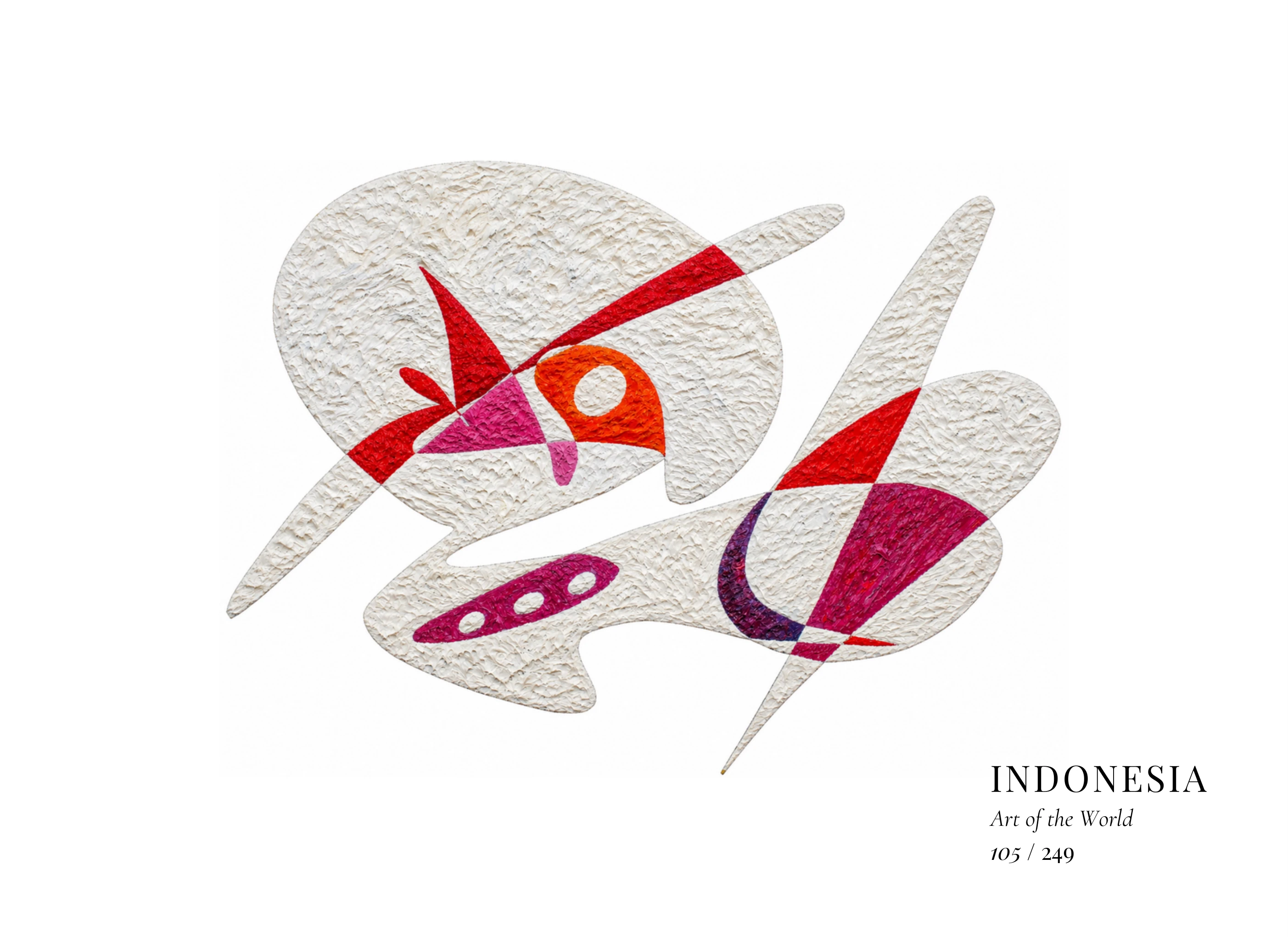
Description
The artwork is dominated by textured white forms separated into two sweeping, irregular masses. Red, orange, magenta and deep violet accents punctuate the pale surface, creating concentrated points of energy. Long tapered extensions cross and project beyond rounded silhouettes, while circular openings and smaller internal compartments establish a rhythm of interruption and connection. Dense impasto gives even the white areas substantial physical presence. The separation between the principal forms, surrounded by generous negative space, suggests an archipelagic rhythm: distinct elements held in visual relationship across open intervals, evoking Indonesia’s geography of islands, passages and interconnected cultural worlds.
Cultural Context
Indonesia stretches across thousands of islands between the Indian and Pacific Oceans, shaped by volcanic mountains, tropical forests and surrounding seas. Its history developed through maritime trade and powerful Hindu-Buddhist and Islamic kingdoms, including Srivijaya and Majapahit, before centuries of Dutch colonial rule. Independence was proclaimed in 1945 and internationally recognised in 1949, creating a republic whose geography connects an extraordinary range of regional societies.
Hundreds of ethnic groups and languages contribute to Indonesian culture, united nationally through Bahasa Indonesia. Javanese, Sundanese, Balinese, Batak, Minangkabau, Papuan and many other traditions sustain distinctive forms of music, dance, architecture and craftsmanship. Batik and ikat textiles, woodcarving, metalwork, wayang shadow theatre, gamelan music and temple traditions demonstrate the depth of this cultural plurality, while contemporary art and cinema continue to reinterpret it.