212 / 249
Nepal
Between High Peaks and Living Valleys
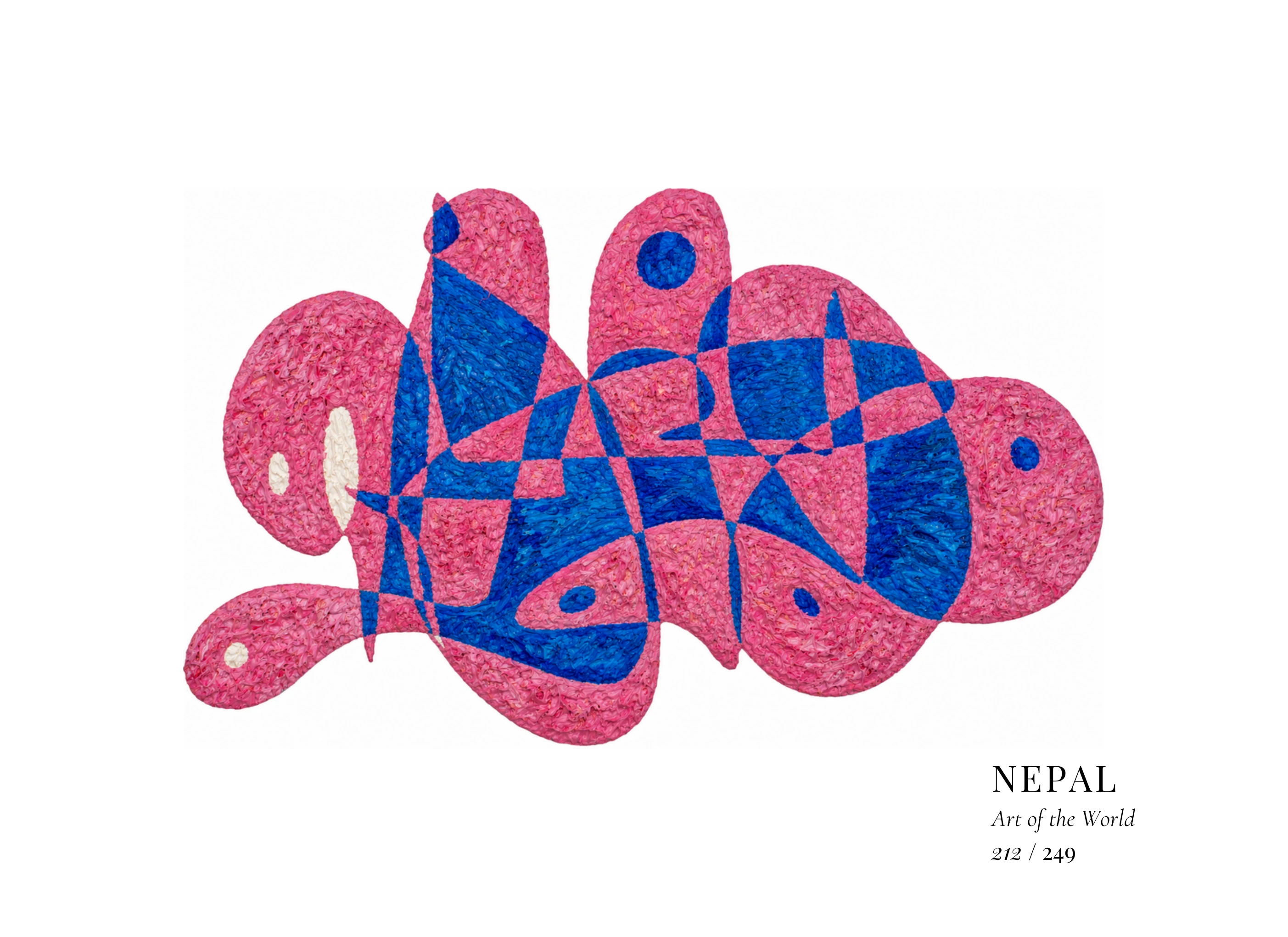
Description
The composition's saturated pink and layered blues create an intense visual rhythm, sharpened by small white accents. Thick impasto gives the interconnected forms a tactile presence, while rounded masses rise into irregular vertical shapes. Cobalt and turquoise arcs, wedges and narrow bands cross the composition, and recurring circular marks establish continuity. The ascending forms and compressed connections suggest Nepal’s dramatic elevations, while the overlapping geometry evokes closely interwoven communities and cultural memory.
Cultural Context
Nepal rises from the subtropical Terai through fertile valleys and forested hills to the Himalayas, including Mount Everest. Its position between India and Tibet encouraged centuries of trade and cultural exchange. Historic kingdoms flourished in the Kathmandu Valley before unification under Prithvi Narayan Shah in the eighteenth century. Nepal became a federal democratic republic in 2008.
Nepal’s identity reflects exceptional linguistic, cultural and religious plurality. Hindu and Buddhist traditions have long developed alongside one another, while Newar architecture, carved wood, metal sculpture, paubha painting, temples and stupas demonstrate remarkable craftsmanship. Across mountains, hills and plains, diverse communities sustain distinctive traditions of textiles, music, dance, festivals and oral storytelling.