215 / 249
Belarus
Threads of Ornament and Living Memory
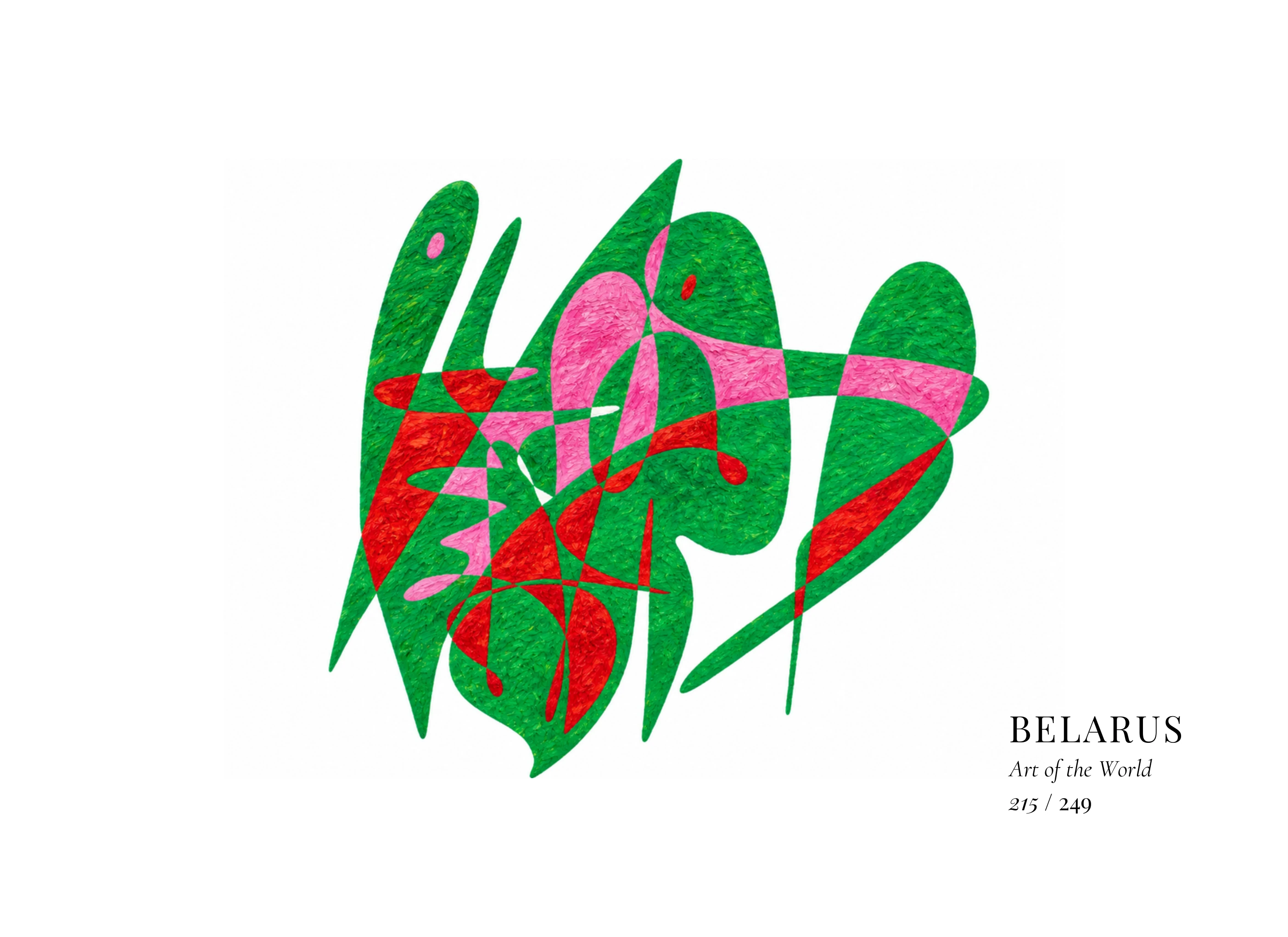
Description
The artwork’s brilliant green field is animated by crimson and pink structures that fold, intersect and taper into fine points. Dense impasto gives every surface a tactile, handmade intensity. The interlocking geometry suggests the rhythmic organisation of woven ornament without reproducing any specific traditional motif. Slender extensions and white openings prevent the composition from becoming enclosed, while the detached right-hand form creates a visual counterpoint. Colour and repetition make the work feel less like a fixed emblem than an evolving field of cultural memory.
Cultural Context
Belarusian culture has been shaped by village traditions, craftsmanship and a close relationship between domestic life and the decorative arts. Distinctive practices include woven rushnik textiles, geometric embroidery, straw weaving, woodcarving and painted ceramics. Folk songs, seasonal celebrations and oral traditions have preserved regional identities across generations.
Literature and the performing arts occupy an equally important place. Yanka Kupala and Yakub Kolas became defining voices of Belarusian-language literature, while folk music draws on lyrical singing, dance and traditional instruments. Historic wooden churches, vernacular houses and ornamental textiles reveal a visual culture in which pattern, repetition and craftsmanship frequently intersect.