219 / 249
Belgium
From Flemish Masters to Magritte
Description
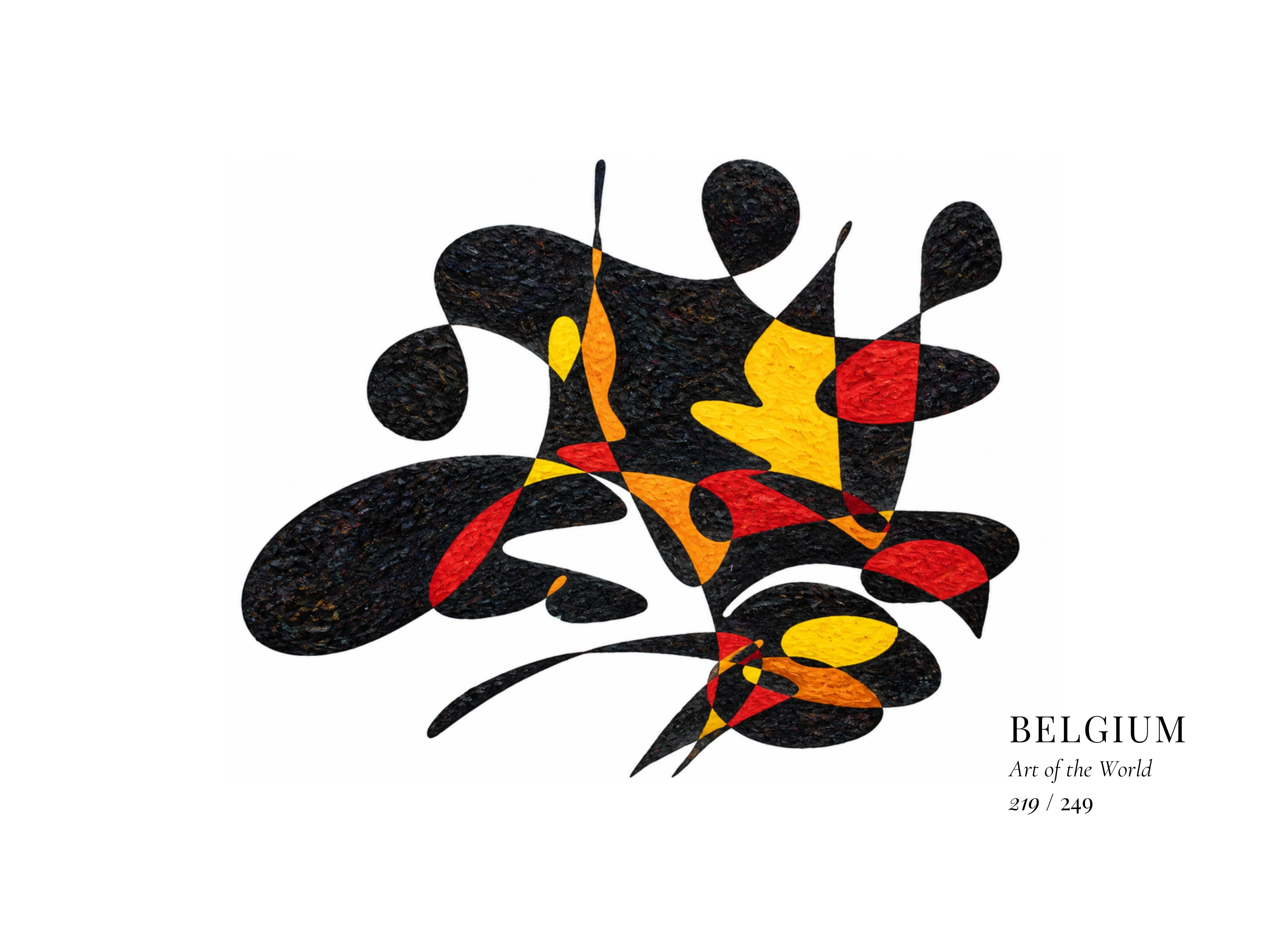
The artwork’s dense black impasto creates a dramatic ground for concentrated yellow, orange and red. Rounded masses collide with sharp verticals, suspended forms and sweeping white openings. Its fragmented geometry shifts between solidity and visual surprise, recalling the unexpected juxtapositions associated with Belgian Surrealism without reproducing its imagery. Detached elements and narrow extensions give the composition a particularly animated, enigmatic rhythm.
Cultural Context
Belgium’s cultural identity is unusually concentrated for a small country. Flemish and French-speaking traditions meet in cities whose guild houses, Gothic architecture and Art Nouveau interiors preserve centuries of craftsmanship. Van Eyck, Bruegel, Rubens and Magritte place Belgian art within a remarkable continuum from meticulous observation to radical Surrealism.
Literature, comics, fashion and design extend that inheritance. Maurice Maeterlinck and Georges Simenon achieved international literary influence, while Hergé helped make the Belgian comic tradition globally recognisable. Brussels and Antwerp remain important centres for architecture, contemporary art, fashion and experimental design.