147 / 249
Malta
Stone, Sea and Mediterranean Memory
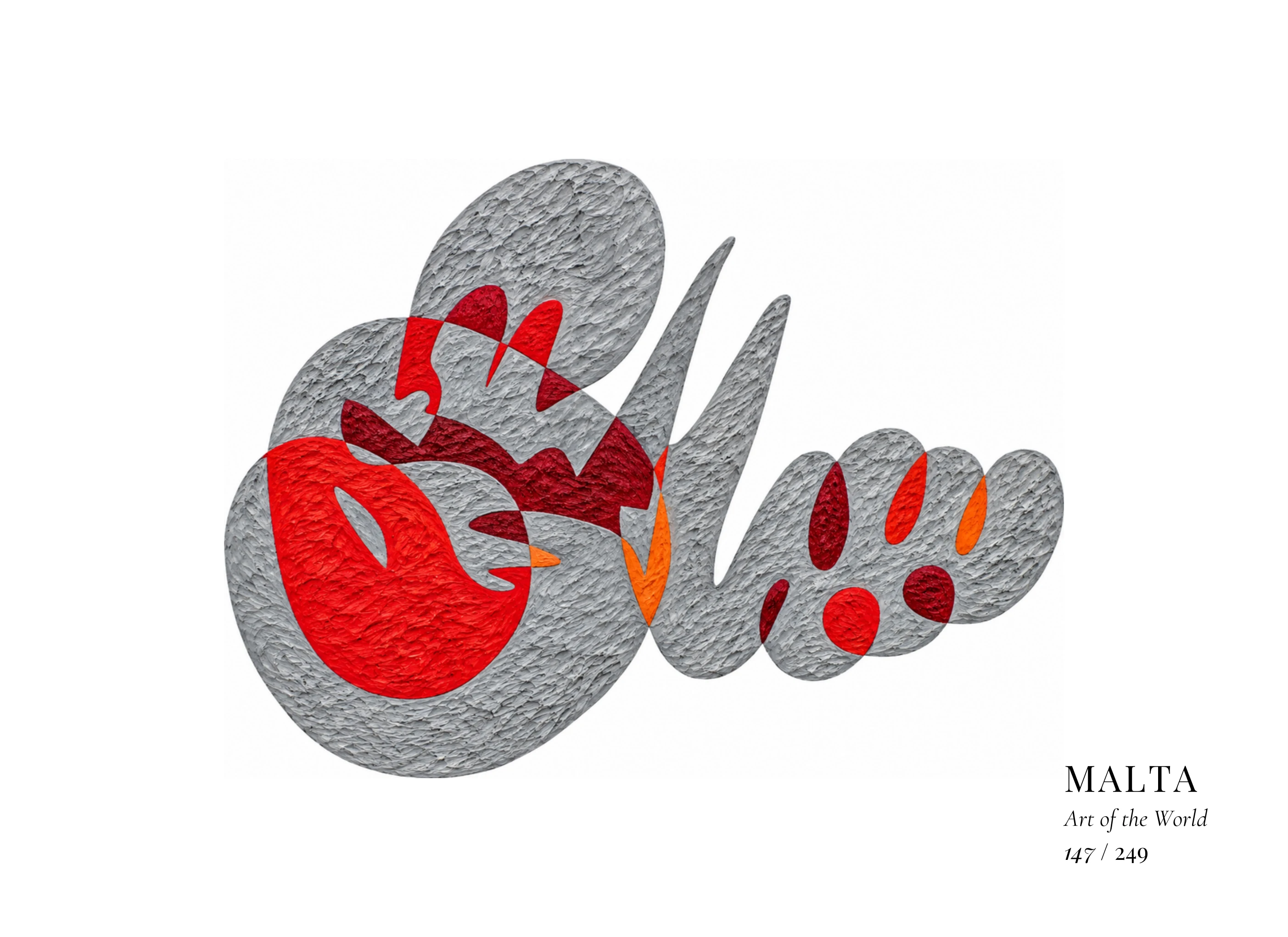
Description
The composition's silvery-grey impasto creates a textured ground against which crimson, scarlet and orange forms appear with exceptional intensity. Broad rounded masses contrast with tall pointed extensions and a sequence of smaller detached forms, producing a rhythm of concentration and dispersal. Curved red passages gather within the larger structure, while isolated accents animate the right-hand cluster. The generous white space between elements reinforces their individuality while preserving visual connection. This balance of separation and cohesion can be read as evoking Malta’s archipelagic geography and layered Mediterranean memory: compact, vivid and shaped by centuries of movement across surrounding seas.
Cultural Context
Malta is an archipelago in the central Mediterranean, positioned between Sicily and North Africa. Its limestone islands preserve evidence of prehistoric temple-building societies and later Phoenician, Roman, Arab, medieval and European connections. Rule by the Knights of St John left a major architectural inheritance, while the British period preceded independence in 1964. Malta’s strategic maritime position has made encounter and exchange central to its long historical development.
Maltese identity reflects Mediterranean plurality. Maltese, a Semitic language written in the Latin alphabet, shares national status with English and carries centuries of linguistic exchange. Limestone architecture, church traditions, lace, silverwork and maritime crafts contribute to the islands’ cultural character. Literature, music, religious festivities, contemporary art, cinema and design continue to connect local traditions with wider Mediterranean and European currents.