213 / 249
Slovenia
Between the Alps and the Adriatic
Description
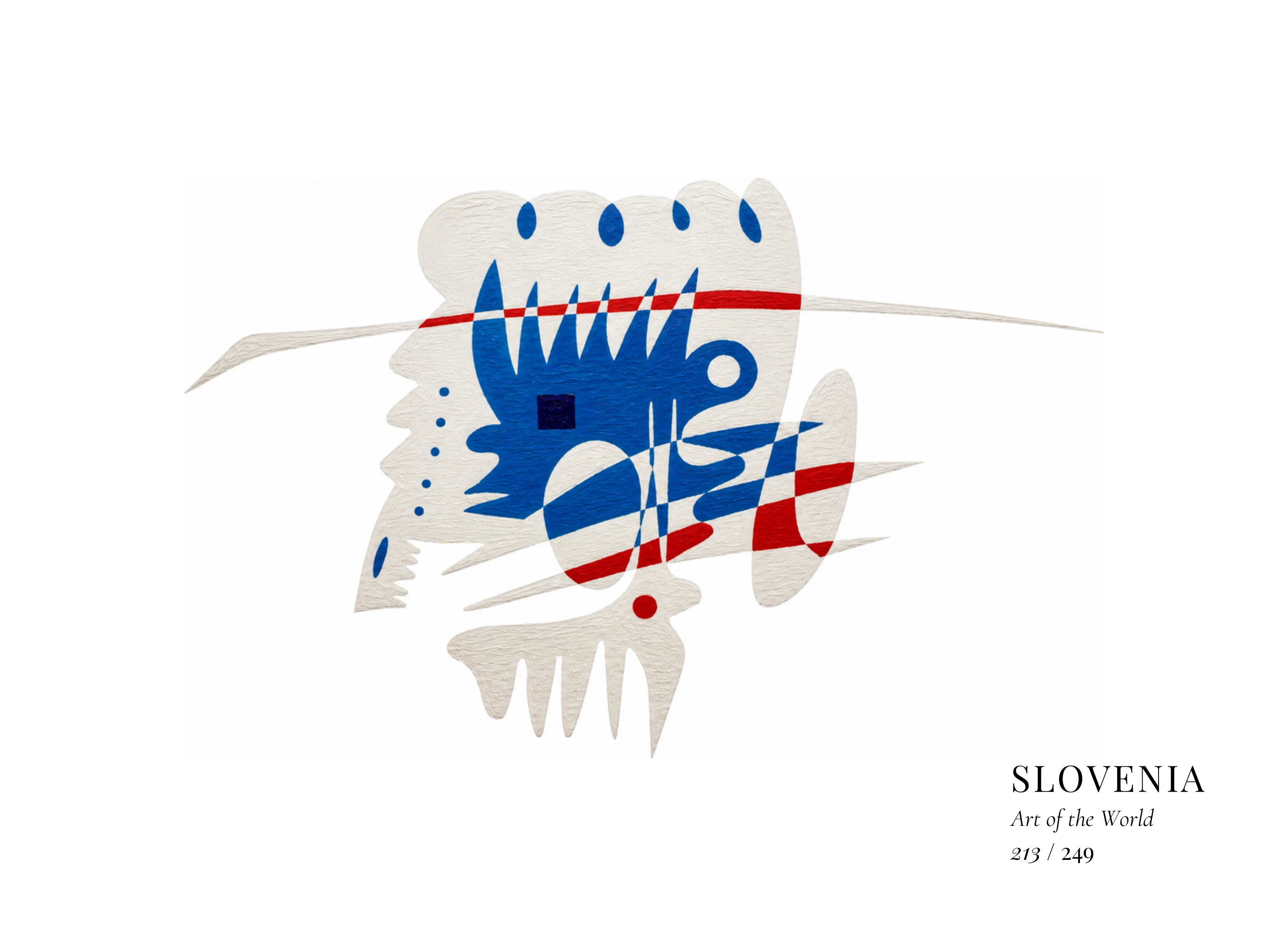
The composition's predominantly white silhouette is crossed by vigorous blue passages and precise flashes of red. Dense impasto gives the pale areas physical weight, while pointed projections, narrow extensions and repeated divisions create a tensile rhythm. Blue concentrates near the centre before dispersing into circles, blades and detached marks. The strong lateral red line and generous white space suggest movement between contrasting regions, evoking Slovenia as a place of continuity sustained through encounter and exchange.
Cultural Context
Slovenia occupies a meeting place between the Alps, Adriatic, Pannonian Plain and Dinaric landscapes. Roman settlement, Slavic migration and centuries within the Habsburg lands shaped its historical development. Later part of Yugoslavia, Slovenia became independent in 1991. Mountains, forests, karst plateaux, rivers and a short Mediterranean coastline give the country remarkable geographical variety.
Slovene is central to national identity, alongside recognised Italian and Hungarian linguistic communities. Literature has played an important role in sustaining cultural consciousness, while folk music, lace-making, woodcraft and regional architecture preserve distinctive traditions. Modernist architecture, graphic design, theatre, cinema and contemporary visual art connect this inheritance with an outward-looking European culture.