39 / 249
Antigua and Barbuda
Islands at the Crossroads of Wind and Memory
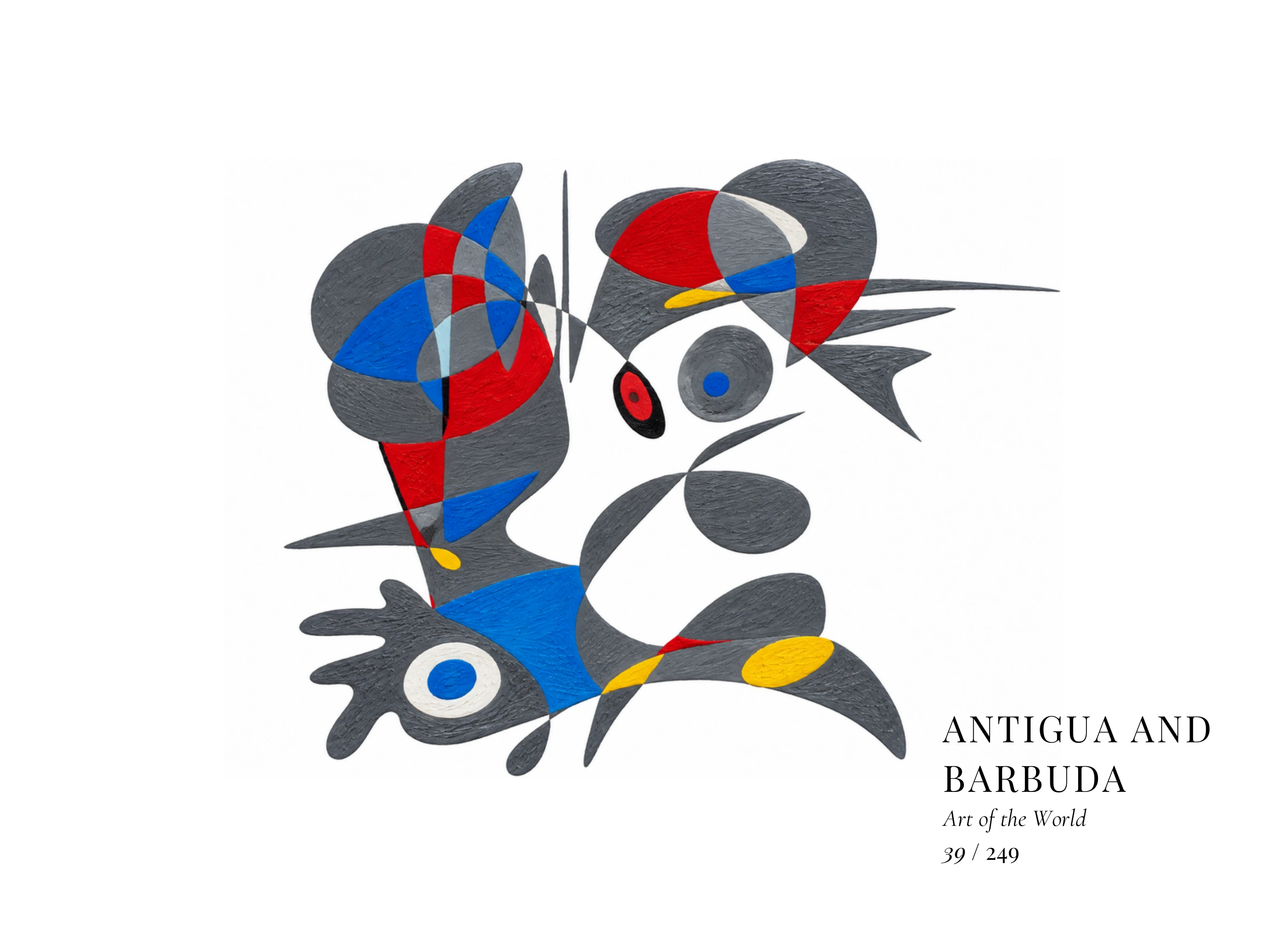
Description
The artwork combines dense grey impasto with vivid turquoise, red, yellow and white. Clustered forms, sharp extensions and detached elements create a lively rhythm across generous white space. Circular shapes soften the angular geometry, while the brilliant turquoise passage anchors the lower composition. The interplay between separated and connected forms can be read as evoking islands joined by shared history, cultural continuity and Caribbean identity.
Cultural Context
Antigua and Barbuda lies between the Caribbean Sea and Atlantic Ocean. Indigenous communities inhabited the islands long before European colonisation. Antigua later became part of the British colonial Caribbean, its history deeply shaped by sugar cultivation and enslaved African labour. Emancipation came in 1834, and independence in 1981 established the modern sovereign state.
The country’s culture draws strongly upon African-Caribbean heritage, enriched by its distinctive island history. English is official, while Antiguan and Barbudan Creole is widely spoken. Carnival, calypso, soca, steelpan, storytelling and maritime traditions remain important expressions of communal identity, alongside literature, visual art and contemporary music.