248 / 249
Cuba
An Island of Rhythms and Memory
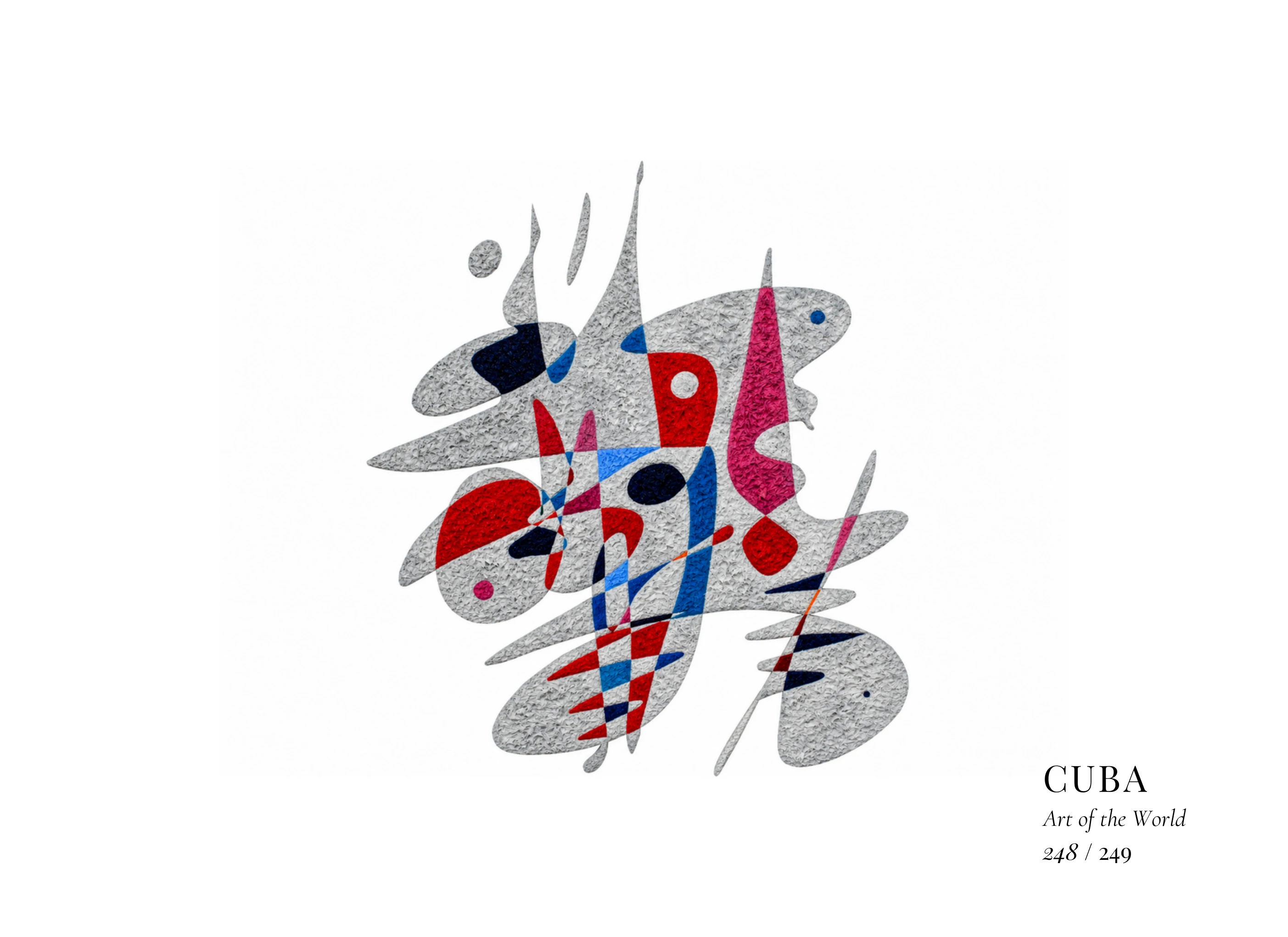
Description
The artwork is built from textured silver-grey forms animated by red, blue, pink and deep navy. Rounded masses intersect with pointed extensions, narrow verticals and fragmented geometric passages, while detached elements activate the surrounding white space. Dense impasto gives the restrained ground a vivid physical presence. The shifting balance between connected and independent forms suggests Cuba’s layered cultural memory, while the strong internal rhythm evokes an island identity shaped by movement, encounter and creative vitality.
Cultural Context
Cuba lies at the meeting of the Caribbean Sea, Gulf of Mexico and Atlantic Ocean. Indigenous societies inhabited the island before Spanish colonisation began in the sixteenth century. Centuries of colonial rule, African enslavement and transatlantic exchange profoundly shaped Cuban society. Independence was achieved in 1902, followed by major political and social transformations during the twentieth century.
Cuban culture brings together African, European and Caribbean inheritances with distinctive national traditions. Spanish is the principal language. Music and dance have achieved exceptional international influence through forms including son, rumba and mambo, while literature, poetry, cinema, architecture and visual arts reveal a similarly rich creative history.