110 / 249
Jamaica
Rhythms of Island Memory
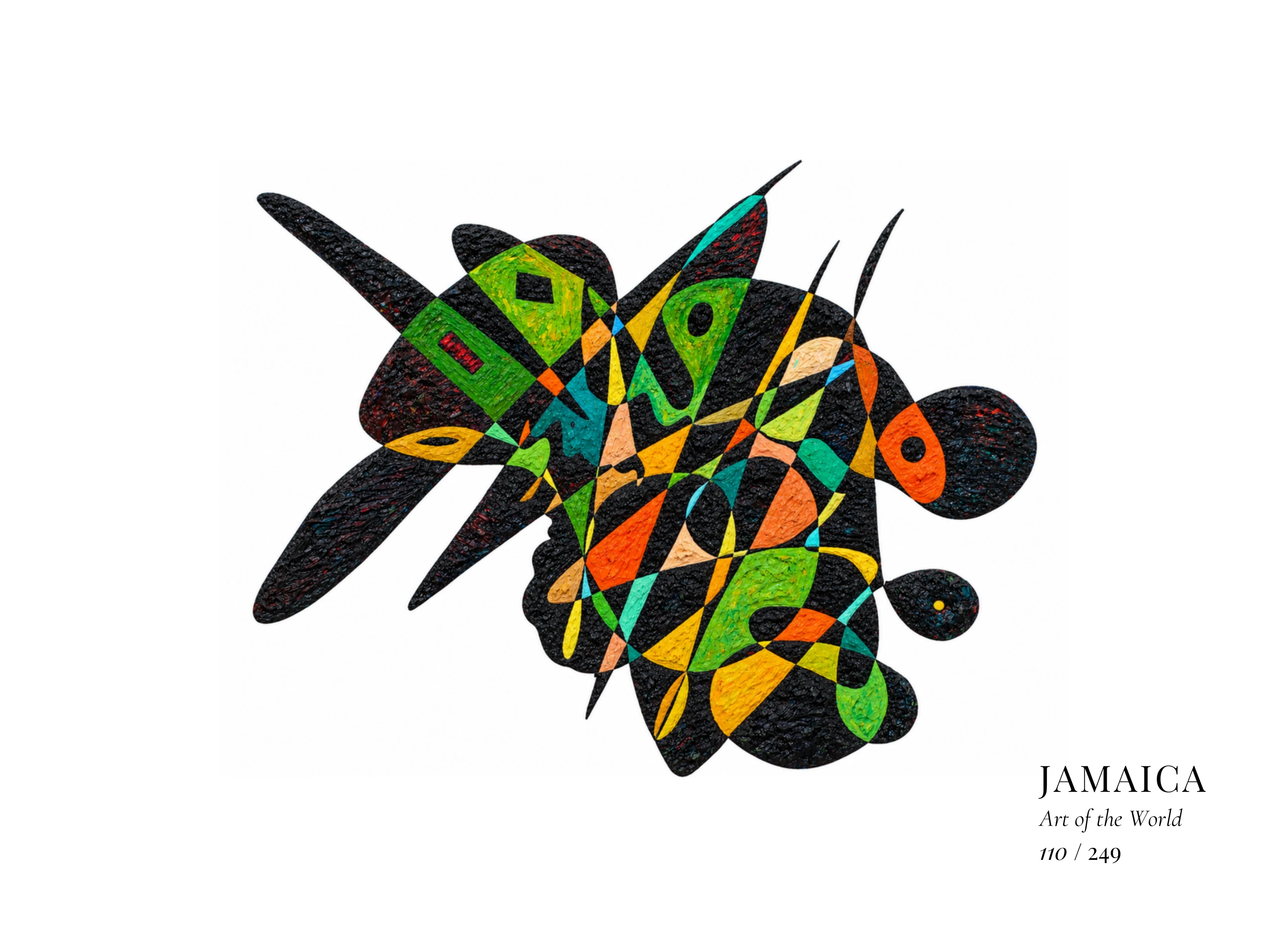
Artist: Gheorghe Virtosu
Catalogue: Art of the World
Catalogue Nr: 110/249
Source of Print: Excerpt from Divine DNA, 2016 (oil on canvas)
Medium: Limited Edition Print
Edition: 1/1
Authentication: Approved and signed by the artist on the reverse.
Artwork Classification: Civilisational Portraiture
Part of Art of the World, an El Arte Monumental project exploring contemporary art, cultural identity and visual memory.
Description
The composition's dense black ground is activated by green, gold, orange and turquoise forms. Angular intersections, pointed extensions and circular elements generate a syncopated visual rhythm, while thick impasto gives every division physical intensity. The composition suggests energy held within complexity: separate forms meet, overlap and redirect one another, evoking a cultural memory continually transformed through movement, encounter and creative renewal.
Cultural Context
Jamaica rises from the Caribbean south of Cuba, shaped by mountains, fertile valleys and a deeply indented coast. Taíno settlement preceded Spanish rule and, from the seventeenth century, British colonisation. Independence in 1962 opened a new national chapter, while the island’s history continued to inform a distinctive cultural confidence.
Jamaican identity draws especially upon African, European and Indigenous inheritances, expressed through language, spirituality, food and communal traditions. Its extraordinary musical culture—reggae, ska, mento and dancehall—has achieved global influence, while literature, visual art and performance sustain powerful traditions of storytelling and social imagination.
Exhibition Context
Dark pointed limbs enclose a densely patterned green and yellow interior where many eyes seem to flash. Jamaica's histories of colonial slavery and emancipation are indispensable to its cultural memory, while its music has travelled far beyond the island. The painting's many rhythms invite that latter connection without pretending to depict a score or instrument. The assertive dark outline and syncopated small marks hold two kinds of energy together: pressure from without and expression from within.