84 / 249
Abkhazia
The Grammar of Memory
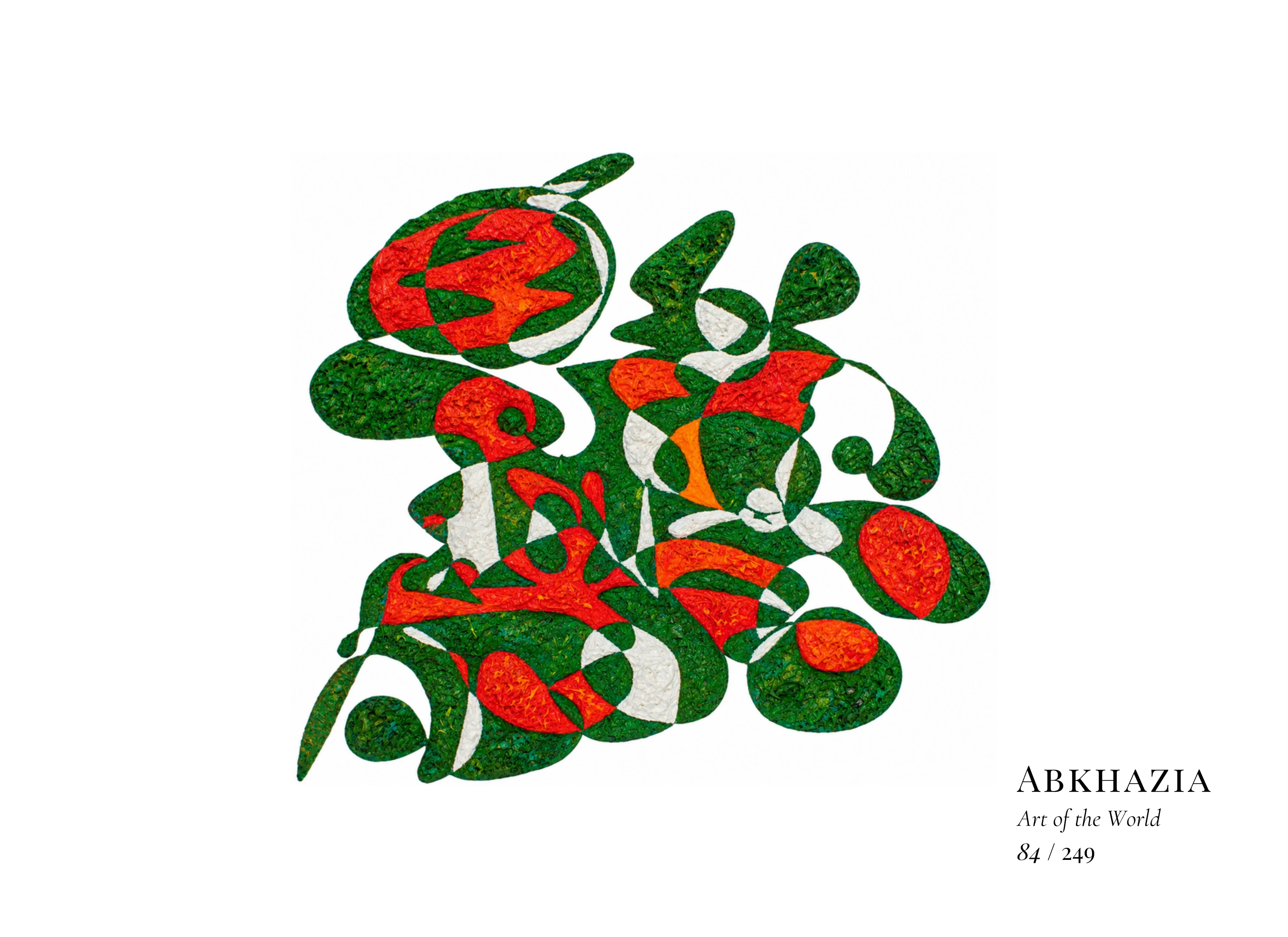
Artist: Gheorghe Virtosu
Catalogue: Art of the World
Catalogue Nr: 084/249
Source of Print: Excerpt from Divine DNA, 2016 (oil on canvas)
Medium: Limited Edition Print
Edition: 1/1
Authentication: Approved and signed by the artist on the reverse.
Artwork Classification: Civilisational Portraiture
Part of Art of the World, an El Arte Monumental project exploring contemporary art, cultural identity and visual memory.
Description
The artwork is dominated by densely worked greens, animated by fiery red-orange and luminous white. Rounded, interlocking forms create a compact silhouette, while narrow extensions and detached elements introduce movement around its edges. The vigorous impasto gives the composition an almost organic density. Its overlapping shapes and recurring curves can be read as evoking a landscape and cultural memory in which mountain, coast, community and inherited tradition remain closely intertwined.
Cultural Context
Abkhazia lies on the eastern Black Sea, where a subtropical coast rises towards the Greater Caucasus. Its history reaches through ancient regional cultures, medieval Abkhazian statehood and centuries of interaction across the Caucasus and Black Sea world. Today its political status remains internationally disputed, while its landscape and historical inheritance sustain a strong sense of place.
Abkhaz cultural identity is rooted particularly in the Abkhaz language and traditions, alongside significant linguistic and cultural diversity. Oral poetry, song, dance, storytelling, hospitality, woodcraft and architectural traditions preserve connections between generations. The region’s cultural life reflects both Caucasian foundations and long exchanges with neighbouring peoples.
Exhibition Context
Red and green loops crowd into many small eyes or seeds without forming a single stable head. Abkhazia's Caucasian cultural histories and its disputed post-Soviet status make this visually plural organism a possible image of belonging under contested political conditions. The form continues beyond its apparent centre, and different profiles surface as one looks. The painting does not settle the status question; it keeps a shared interior and unsettled outlines in view together.