
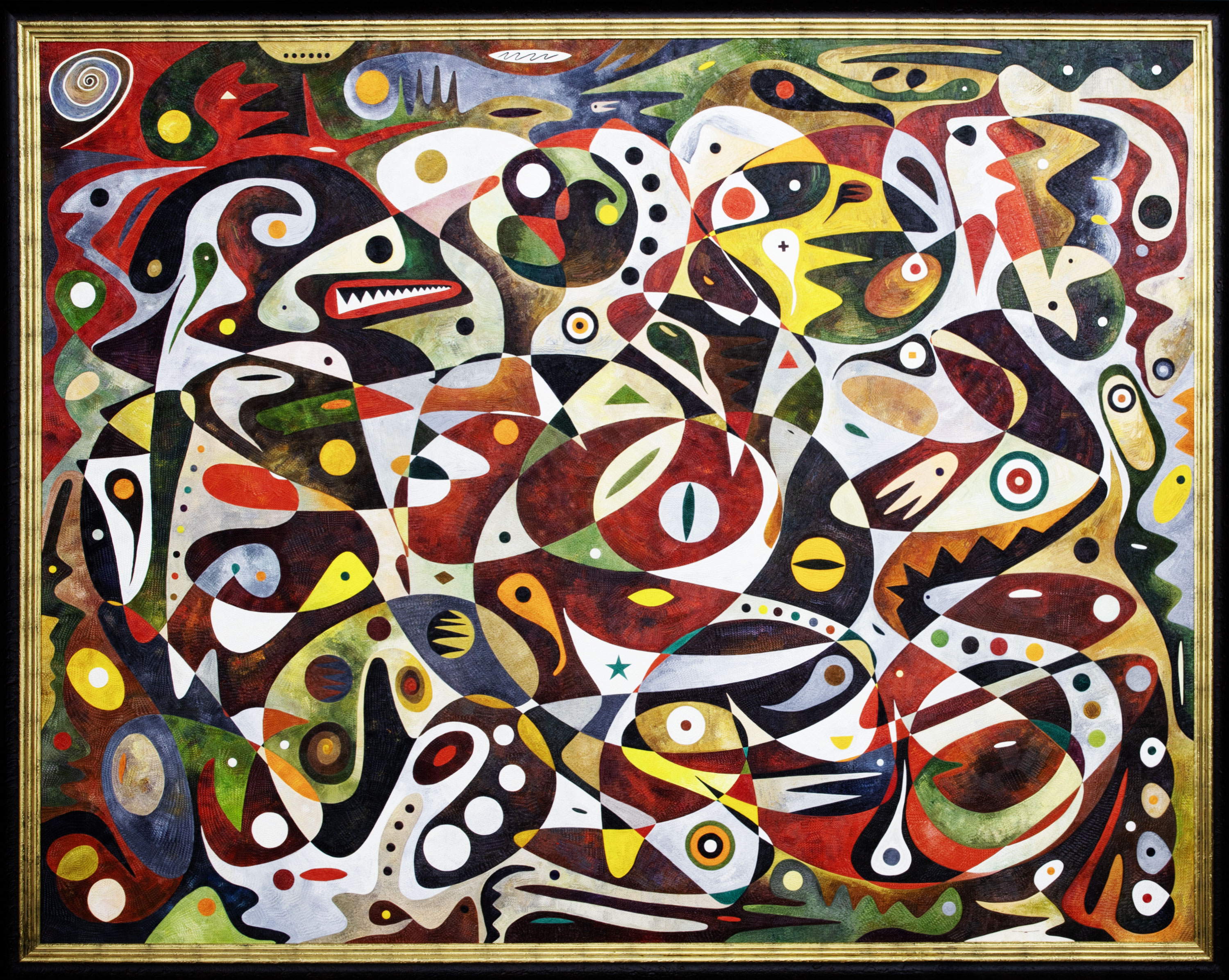
World War II, 2008 Oil on canvas3.23 m X 4.05 m
The Architecture of Total Conflict
Concept & Meaning
The painting interprets the Second World War through abstraction, transforming the magnitude of global confrontation into visual rhythms of tension, collision, and convergence.
Rather than illustrating specific battles or leaders, the composition evokes the collective forces of technological warfare, shifting alliances, and global transformation.
Layered movements and structural contrasts suggest the simultaneous destruction and reconfiguration of the world order that emerged from the conflict.
Scale & Spatial Impact
The monumental scale establishes a physical relationship with the viewer, inviting movement across the surface and revealing shifting visual intensities.
From a distance, the composition conveys structural unity; up close, energetic painterly gestures reflect the fragmentation, urgency, and complexity of global war.
Artistic Context & Inspirations
Created in 2008, World War II reflects an exploration of collective memory, monumental composition, and the role of painting in addressing historical transformation.
The work engages abstraction as a means to contemplate the scale of human conflict while preserving openness of interpretation.
Materiality & Technique
Executed in oil on canvas, the surface is constructed through layered accumulation and energetic gesture, emphasizing the physicality and duration of the painting process.
Paint operates structurally rather than illustratively, creating a material record of force, movement, and intention.
Institutional & Collector Context
World War II aligns with discussions around historical narrative, monumental abstraction, and the expanded role of painting in cultural memory, making it suitable for:
- Museum or institutional collections
- Cultural or architectural installations
- Major private collections focused on historical works
Its scale and conceptual clarity reinforce its presence as a singular and enduring work.
Closing Statement
World War II proposes painting as a vessel for historical reflection. Through scale, abstraction, and material presence, the work invites sustained engagement with one of the defining events of the twentieth century.
A work to contemplate, move alongside, and return to.
Artist Insights
Monumental oil paintings exploring scale and historical presence
View Artist ProfileExplore the Work
Navigate through documentation, critical essays, and collection placement for World War II, 2008.
Position Within the Collection
World War II forms part of The Architecture of Conflict, a body of work examining warfare as a transformative force in the development of civilizations, political systems, and historical change. Within the collection, the work focuses on a conflict whose scale, destruction, and consequences profoundly shaped the modern world.
Historical Context
Created between 2006 and 2008, World War II examines the global conflict fought between 1939 and 1945. Involving major powers across Europe, Asia, Africa, and the Pacific, the war resulted in unprecedented military mobilization, geopolitical transformation, and human loss, contributing to the emergence of a new international order defined by decolonization, the Cold War, and the creation of global institutions.
Intellectual Framework
Military history, modern history, Second World War studies, and geopolitical studies, informed by the work of Antony Beevor, Richard Overy, Ian Kershaw, and Gerhard L. Weinberg.
Research Value
Contributes to interdisciplinary research on warfare, total war, state transformation, geopolitical change, and the role of conflict in shaping the modern international order.
Relationship to Other Works
Part of The Architecture of Conflict, a series examining warfare, political struggle, revolution, and the forces that shape historical change across civilizations and eras.
Collection Status
Permanent Collection of El Arte Monumental. This work is not available for acquisition and is being preserved as part of the foundation's future institutional collection.
𐰘𐰙𐰖𐰢𐰡𐰘𐰟𐰞𐰜𐰛𐰡𐰘𐰚𐰝𐰡𐰖𐰡𐰖𐰝𐰤𐰙𐰖𐰝𐰘𐰘𐰣𐰤𐰡𐰘𐰣𐰘𐰢𐰝𐰘𐰡𐰥𐰞𐰘𐰣𐰤𐰞𐰢𐰖w𐰘𐰝𐰙𐰢𐰟𐰞𐰛𐰤𐰝𐰖𐰟𐰖𐰣𐰚𐰝𐰠𐰛𐰟𐰖𐰣𐰢𐰖𐰡𐰟𐰤𐰖𐰣𐰚𐰖𐰣𐰛𐰟𐰟