
China: Art, Cultural Identity and the Formation of Visual Memory
04 Sep 2026 | NewsHow one contemporary artwork can move beyond the boundaries of painting and begin to participate in the visual memory of a country.
Images have always participated in the way places are remembered. Some emerge from history, others from religion, architecture, political power or popular culture. Over time, repeated exposure transforms certain forms into visual shorthand: they become recognizable before their histories are consciously recalled.
China possesses one of the richest visual inheritances in the world. Its architecture, calligraphy, landscape traditions, ceramics, textiles, symbols and systems of colour have travelled across cultures for centuries. Yet the contemporary representation of a country cannot depend indefinitely on inherited symbols alone. Every generation produces new images through which identity is encountered and remembered.
Art of the World begins from this proposition. The project associates one original contemporary artwork with each country and follows what happens when that image moves beyond the conventional boundaries of the painting.
China forms one chapter of this evolving visual atlas.
One Country, One Image
The premise is deliberately simple: one country, one artwork, one recurring visual identity.
The image is not intended to replace a flag, national emblem or established cultural symbol. Nor does it attempt to compress the complexity of a nation into a single painting. Its function is different.
It introduces an additional contemporary image into the visual field surrounding a country.
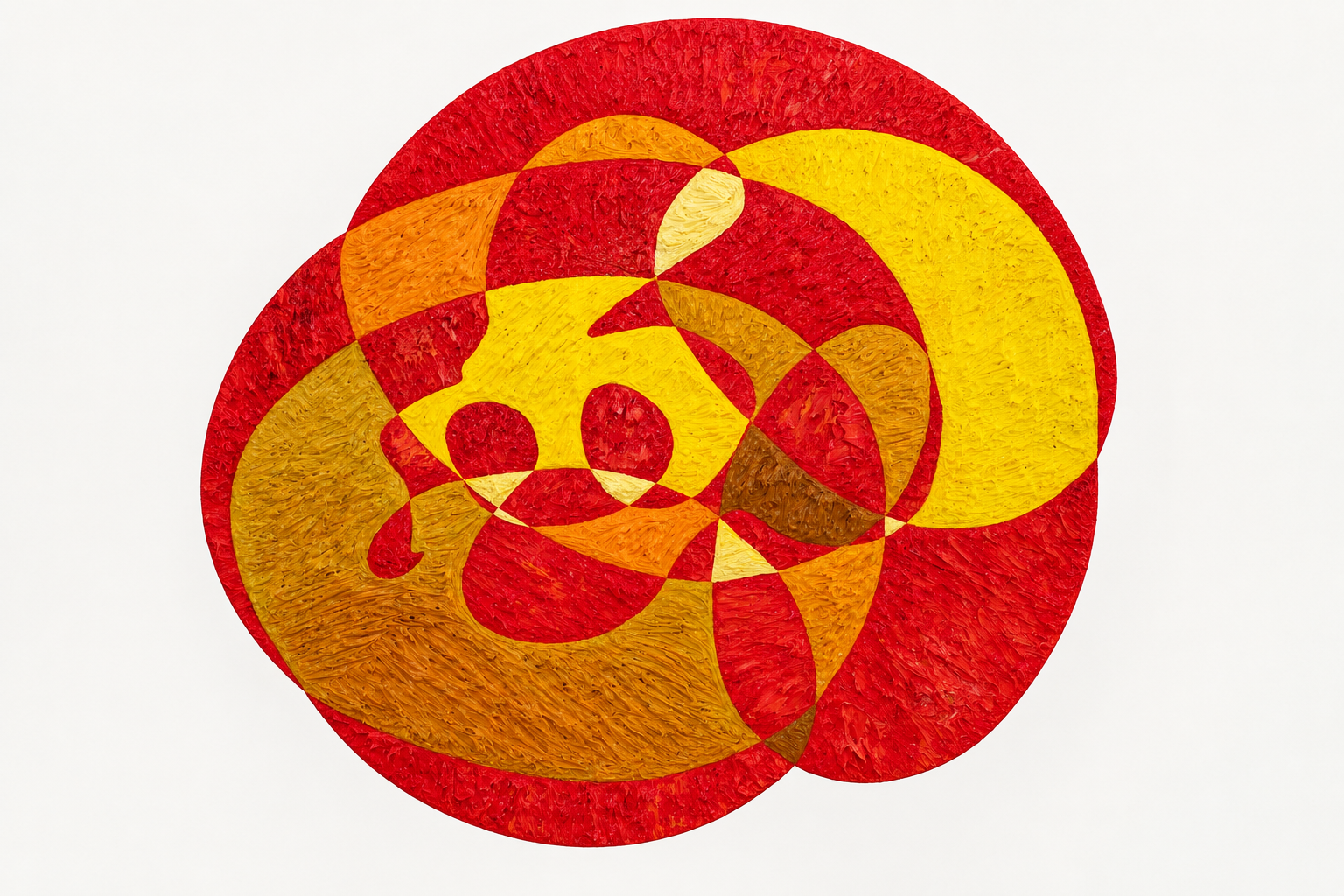
For China, the selected work by Gheorghe Virtosu operates through abstraction rather than illustration. There are no monuments to identify, no map and no written name required to explain what the viewer should see. Instead, colour, movement, density and structural relationships construct the image.
This absence of literal representation is fundamental to the project. A contemporary cultural image does not necessarily have to describe a place. It can become associated with it through continuity, context and repetition.
China Beyond the Familiar Symbol
Tourism has made national imagery extraordinarily visible. It has also made much of it repetitive.
The same monuments, flags, skylines, animals, maps and decorative motifs appear thousands of times across postcards, magnets, textiles, packaging and digital images. Their immediate recognizability is commercially effective, but constant repetition can reduce a complex culture to a small vocabulary of familiar signs.
Contemporary art provides another possibility.
Instead of asking which existing symbol best represents China, Art of the World asks whether a new image can gradually acquire an association with China through sustained cultural circulation.
The distinction is important.
The artwork does not claim to depict China.
It becomes the China image within the project.
That relationship is constructed over time.
The China Image
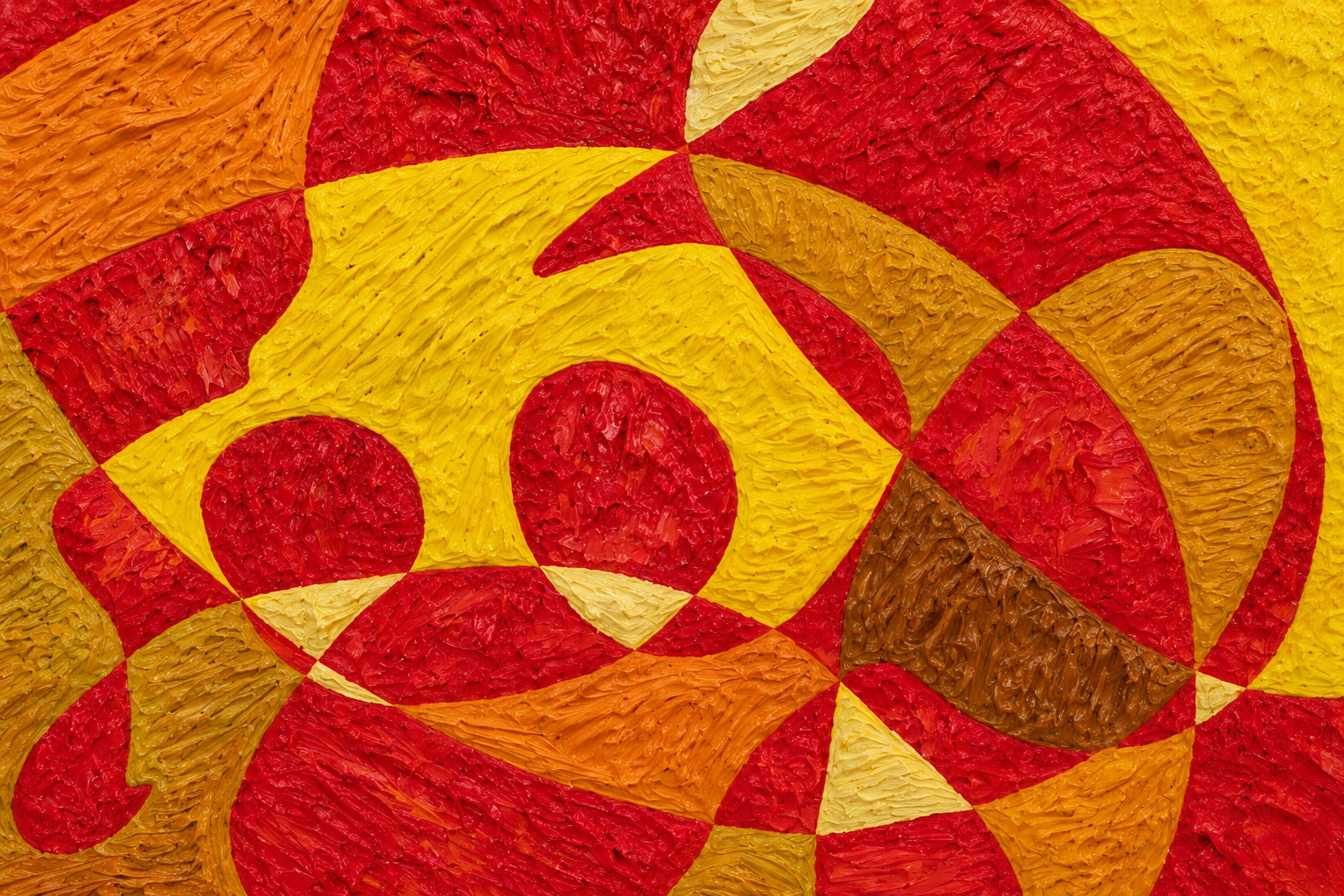
Virtosu's China composition is dominated by warm reds, yellows, ochres and earthen tones arranged through interconnected circular and organic structures. Forms overlap, divide and return into one another. Individual elements remain visible, yet they participate in a larger visual organism.
The image can be encountered immediately as an abstract composition. It does not require an explanation before it can be experienced.
Yet prolonged observation reveals something more structural. The work is built through relationships: between individual and whole, separation and continuity, movement and stability.
This makes the painting particularly appropriate to a project concerned with visual memory.
Recognition rarely begins with complete understanding. We first remember configurations: a particular relationship between colours, shapes, proportions and rhythms. Meaning develops around that recognition later.
The China image is therefore not dependent upon a written message. Its ambition is to become increasingly familiar through seeing.
From Artwork to Visual Memory
Visual memory is cumulative.
An image encountered once may be appreciated and forgotten. An image encountered repeatedly, in different environments and at different scales, begins to establish a place in memory.
This principle operates throughout visual culture. Symbols become recognizable because they recur. Typefaces become associated with institutions because they are consistently used. Colours become attached to organisations, places and ideas because their relationships are maintained over time.
Art of the World applies this principle to contemporary painting.
The original artwork remains the source. But the image is allowed to circulate.
A person may encounter it first as a painting, later on a postcard, then on an object carried by another person, and eventually within a publication or exhibition. None of these encounters needs to reproduce the previous one exactly. What remains constant is the visual identity.
The artwork consequently acquires another dimension: recognition through circulation.
The Everyday Object as an Image Carrier
Art history has traditionally privileged particular places of encounter: the studio, collection, gallery, museum and book.
Contemporary visual culture is considerably less confined.
Images now move continuously between physical and digital environments, between cultural institutions and ordinary life. An image seen on a wall can subsequently appear on a screen, in print, on fabric or on an object carried through a city.
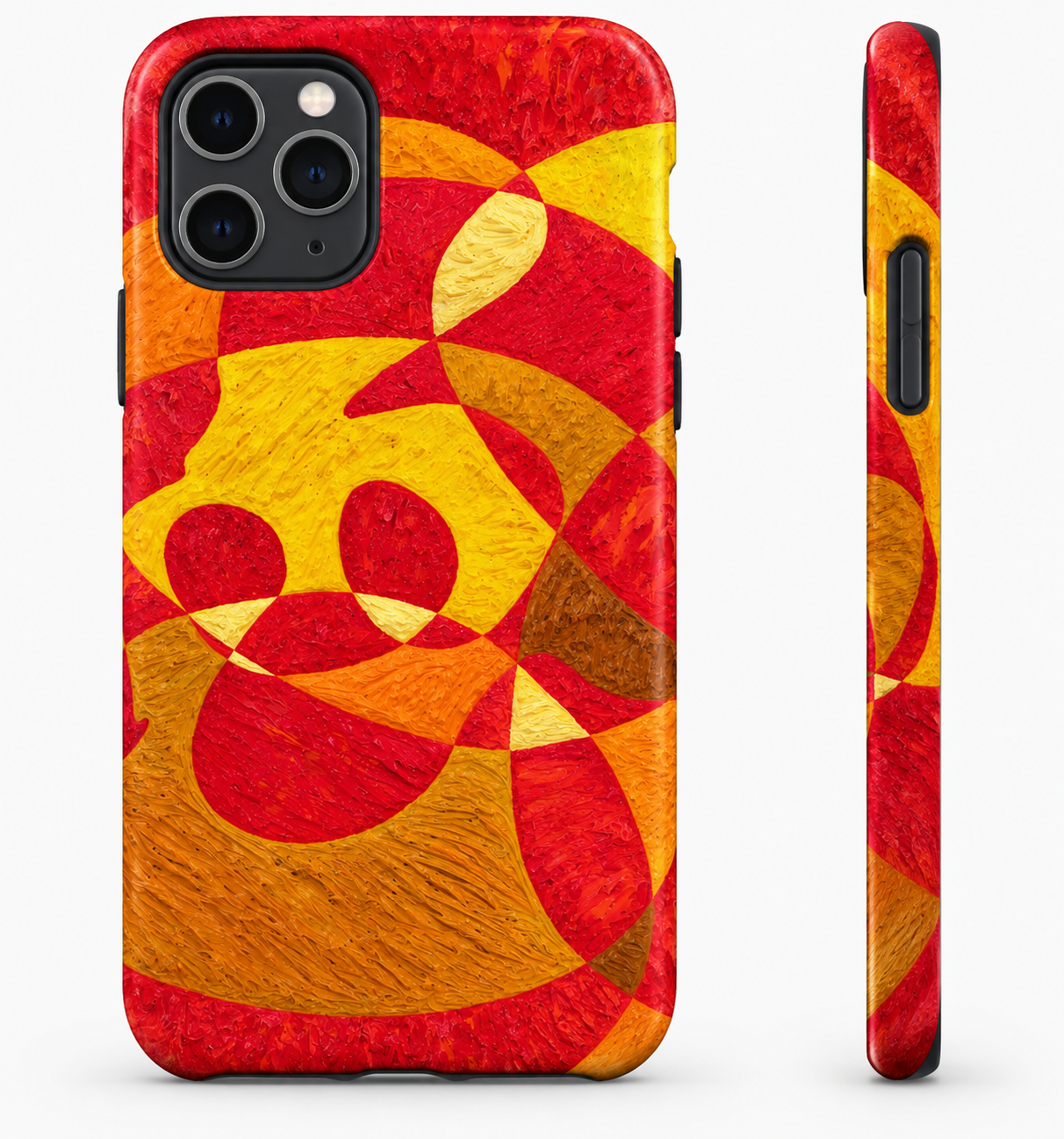
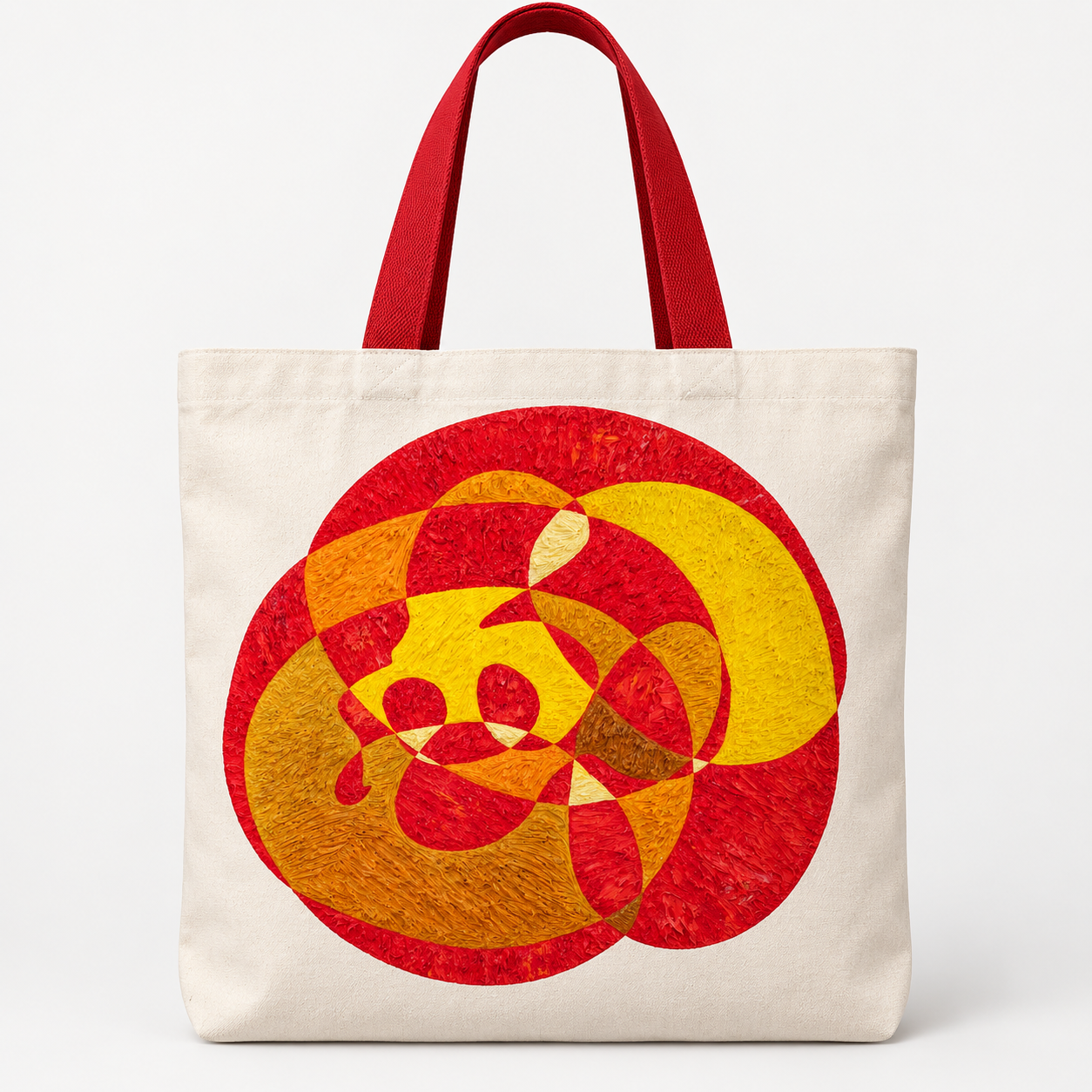
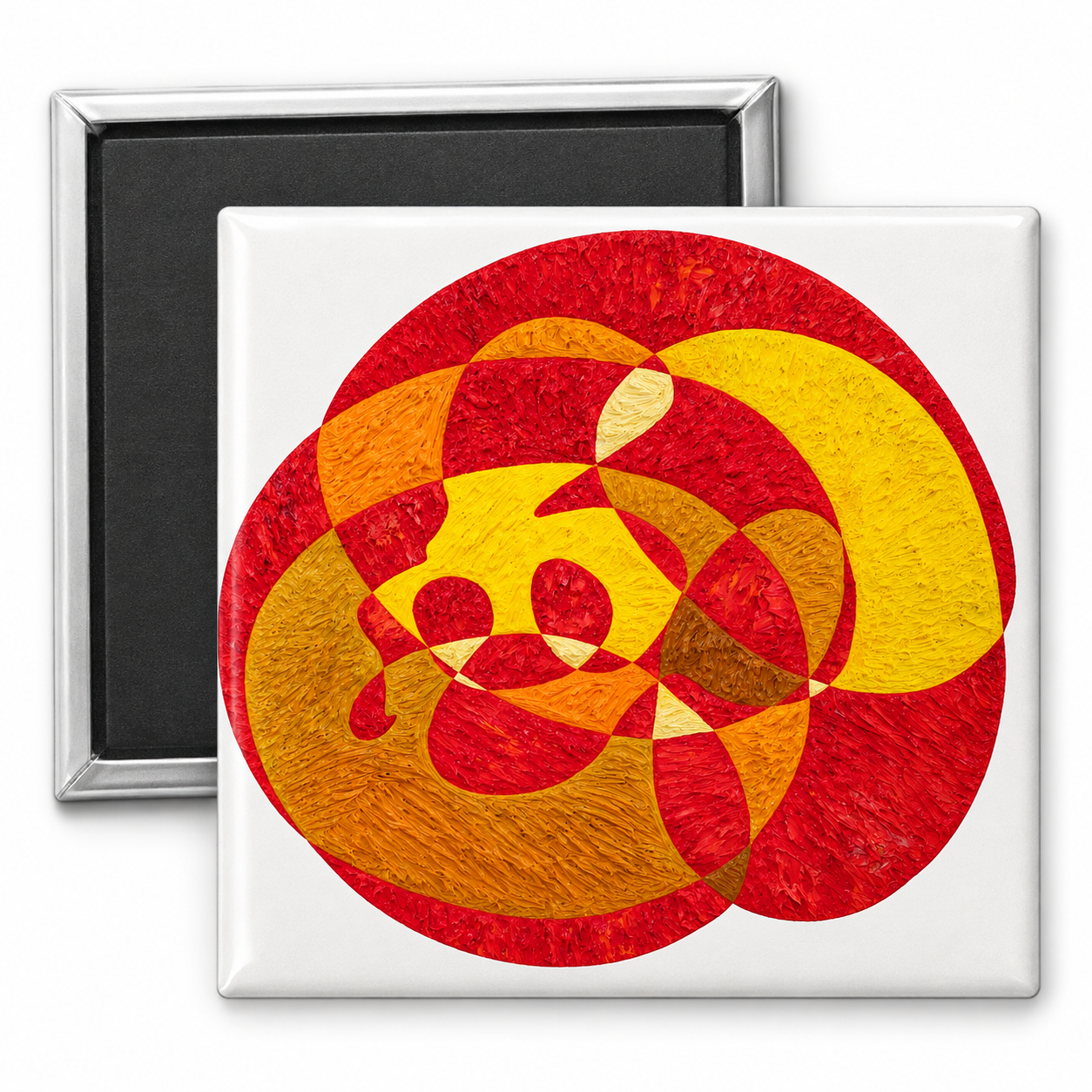
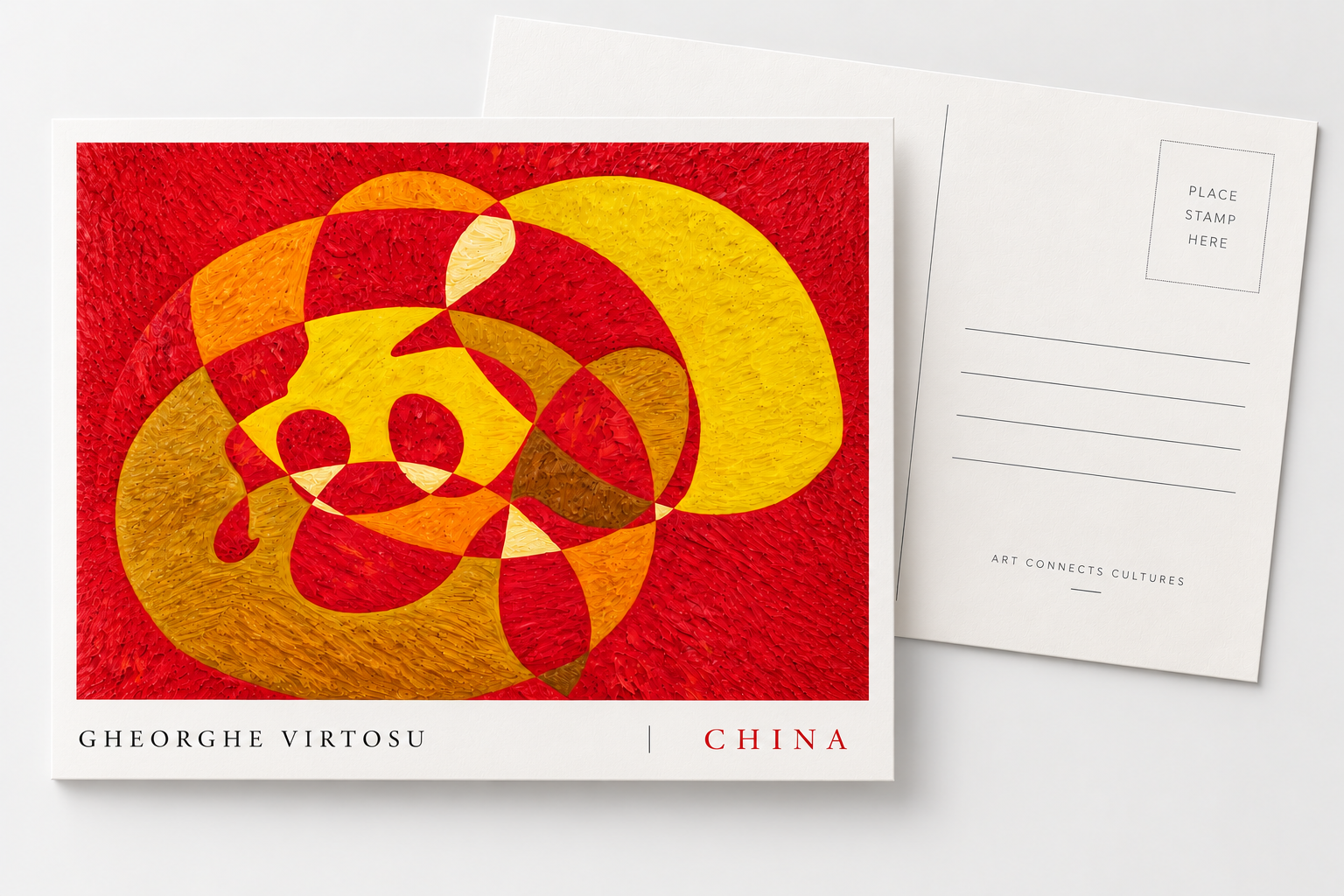
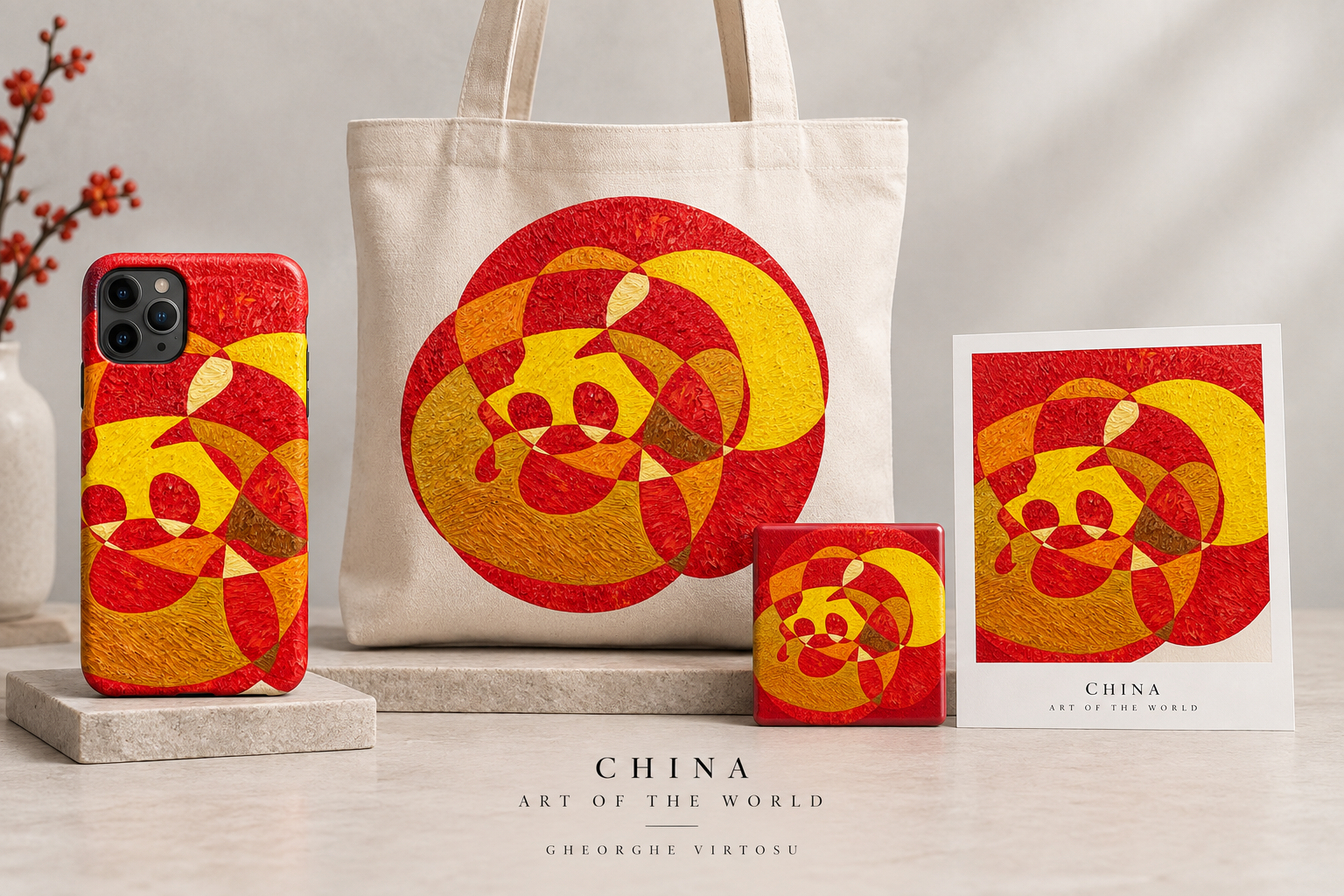
Within the China chapter of Art of the World, four objects demonstrate this movement particularly clearly: the phone case, the tote bag, the magnet and the postcard.
Each has a different relationship with its user.
The postcard travels between people and places. The magnet becomes a persistent domestic image. The tote enters public space. The phone case accompanies an object that many people handle and see throughout almost every day.
Their significance within the project lies not primarily in their function as merchandise, but in their ability to carry an image through different environments.
The painting moves from a singular object into repeated visual encounters.
Art and the Tourist Object
The souvenir occupies an unusual position in material culture. It is inexpensive compared with the experience it represents, yet it may remain with its owner for decades.
A postcard bought during a journey can survive long after photographs have disappeared into digital archives. A magnet can remain visible in a kitchen every day. A bag returns from one country and circulates through another.
Tourist objects therefore perform a function that extends beyond commerce: they transport visual memory.
Historically, they have overwhelmingly relied upon immediately recognizable representations of destination. Art of the World introduces contemporary abstraction into this established relationship between place, object and memory.
The result is not an attempt to transform fine art into conventional souvenir imagery. It asks whether the souvenir itself can become a vehicle for a more contemporary visual language.
Repetition Without Uniformity
For a visual identity to develop, the image must remain recognizable while adapting to different formats.
A phone case is narrow and vertical. A postcard is rectangular. A tote provides a larger textile surface. A magnet compresses the image into a much smaller field.
The China composition therefore does not appear identically on every object. Cropping, scale and placement inevitably change.
What remains stable is its visual DNA: its dominant colours, structural relationships, characteristic forms and overall rhythm.
This distinction between repetition and duplication is central to the project.
Visual memory does not require seeing precisely the same object repeatedly. It requires encountering enough consistent information to recognize a relationship between different encounters.
A Contemporary Image of China
No single artwork can represent the historical, geographical and cultural complexity of China. Art of the World does not propose that it can.
Its proposition is narrower, and perhaps more interesting.
Can an original contemporary artwork, consistently associated with a country and circulated through different cultural contexts, gradually acquire an independent place within the visual memory surrounding that country?
China provides one testing ground for that question.
The painting begins as an artwork. Through repetition it becomes an image. Through circulation it enters objects and environments beyond the artwork itself. Through continued association, the image may eventually become recognizable as belonging to a larger cultural idea.
The process cannot be manufactured instantaneously. Visual memory requires time.
That is precisely why consistency matters.
Art of the World
Art of the World is an ongoing El Arte Monumental project built around a simple structure:
One country. One artwork. One evolving visual memory.
Each country receives its own image. Each image remains rooted in an original work of art. And each is followed as it moves between painting, publication, objects and public circulation.
China represents one part of what will ultimately become a larger visual atlas: not a collection of national symbols, but a contemporary experiment in how new cultural images are formed, circulated and remembered.
Gheorghe Virtosu · China
Art of the World
El Arte Monumental
For enquiries and cultural collaborations: info@elartemonumental.com