
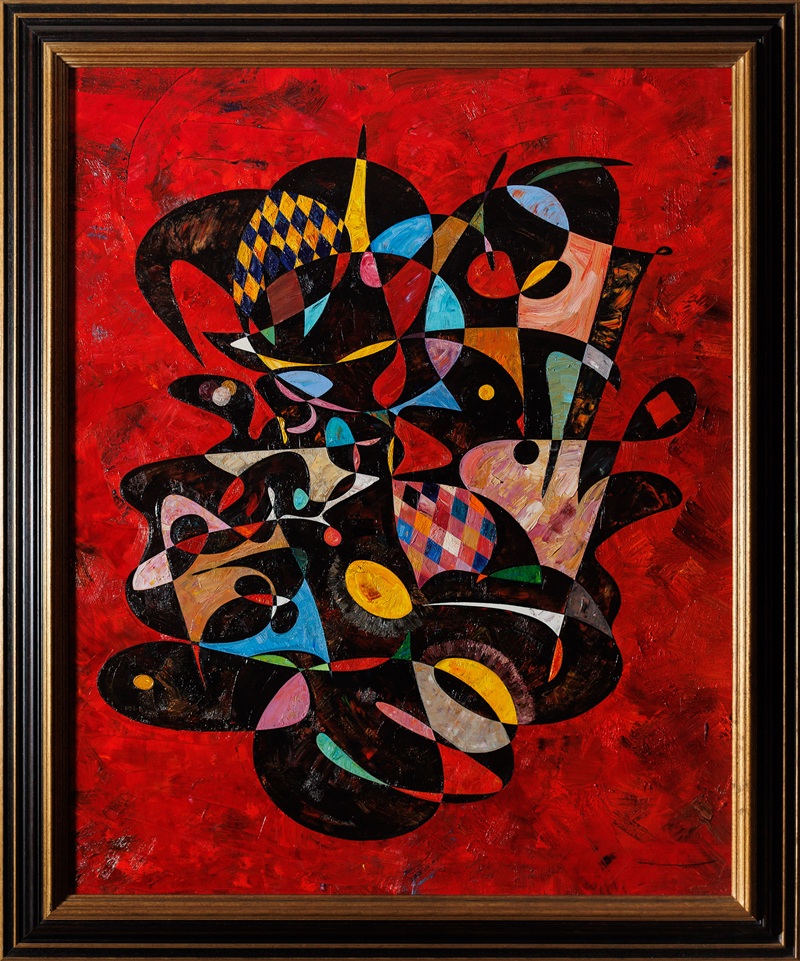
Twin Clowns: When One Painting Became Two
Gheorghe Virtosu discusses why a single painting could no longer represent both Florence and Venice, leading to two distinct visions of historical identity and the loss of historical time.
25 Jul 2017Summary
In this interview, Gheorghe Virtosu discusses the evolution of Twin Clowns from a single painting into two independent works: Twin Clowns: Florence and Twin Clowns: Venice. He explains that the original painting came to embody two distinct historical identities that could no longer coexist within a single image, leading him to rename the original work and create a second painting with the same composition but a different chromatic language. Virtosu reflects on Florence and Venice as symbols of civilizations whose extraordinary cultural achievements outlived their political independence, interpreting the title Twin Clowns as a metaphor for the loss of historical time rather than comedy. The conversation explores how colour shapes historical meaning, why identical structures can convey different identities, and how the project became a philosophical investigation into civilization, memory, and the fragile relationship between cultural greatness and historical permanence.Interview Transcript
Unlike many of your paintings, Twin Clowns did not begin as two separate works. How did the project evolve?
The original Twin Clowns was completed as a single painting. At that time there was no Florence and no Venice. It simply existed as Twin Clowns. The central idea was already there—the notion that great civilizations sometimes lose the one thing they can never recover: historical time.
When I returned to the painting, I realised it was carrying two historical identities at once. Florence and Venice shared certain historical qualities, but they were not the same civilization. The more I thought about it, the more I felt that the original painting could not honestly represent both. Venice deserved its own vision.
So you didn't repaint the original.
No. I renamed it.
The original painting became Twin Clowns: Florence, while I created a new painting, Twin Clowns: Venice, using the same structural composition but an entirely different chromatic language. I wasn't replacing the first painting. I was allowing each city to possess its own identity.
Why Florence and Venice?
Because both represent extraordinary moments in European civilization. They transformed art, commerce, architecture and political thought, yet both eventually disappeared as independent republics during the unification of Italy.
That contradiction fascinated me. Their cultural achievements survived, but their political identities did not.
The title Twin Clowns is unexpected. Why call them clowns?
The clown is not a comic figure.
It is a metaphor for the irony of history.
Florence and Venice possessed remarkable intelligence, wealth and cultural influence, yet history continued moving beyond them. They became symbols of civilizations that lost the most valuable resource any society possesses: time.
What do you mean by the loss of historical time?
Time is the only resource that cannot be recovered.
A civilization may produce masterpieces and influence generations, but if it fails to preserve its historical moment, those achievements become memory instead of continuity. Florence and Venice remind us that cultural greatness alone does not guarantee historical permanence.
The compositions remain almost identical, yet the colours are completely different. Why?
Because structure wasn't the problem.
The composition already expressed the philosophical idea I wanted. What needed to change was the identity. Colour became the language through which each city could acquire its own atmosphere without altering the underlying structure.
So colour became part of historical meaning rather than decoration.
Exactly.
Most people think colour simply changes appearance. I believe it changes interpretation. The same composition can evoke entirely different historical associations depending on its chromatic language.
That became one of the central discoveries of the project.
Did creating Twin Clowns: Venice change the way you understood the original painting?
Very much so.
Once Venice possessed its own identity, Florence also became clearer. The original painting was no longer trying to represent two civilizations simultaneously. Each work could now speak with its own voice while remaining part of the same philosophical idea.
Would you describe the two paintings as companions?
Yes, but not because one completes the other.
They represent two historical interpretations built upon the same visual foundation. Their relationship demonstrates that a single artistic structure can sustain multiple historical identities without losing its coherence.
Where does Twin Clowns sit within your artistic development?
It became an important turning point because it taught me that paintings are capable of evolving conceptually. Sometimes a work reveals possibilities that were not fully visible when it was first completed.
Twin Clowns ultimately became less about Florence or Venice themselves and more about the relationship between historical memory, identity and the passage of civilizations through time.
Finally, what question do the Twin Clowns paintings leave with the viewer?
I think they ask whether cultural greatness is enough to survive history.
Can a civilization produce extraordinary beauty and still lose its historical identity? Florence and Venice suggest that it can. That paradox interested me far more than painting either city itself. In the end, Twin Clowns is not really about two places. It is about the fragile relationship between achievement and permanence.
Editorial Note (2025)
After completing the original Twin Clowns, Gheorghe Virtosu later recognised that a single painting could not adequately embody both Florence and Venice. Rather than altering the original work, he renamed it Twin Clowns: Florence and created a second painting, Twin Clowns: Venice, preserving the same composition while developing a distinct chromatic identity. This decision transformed one painting into a two-part philosophical project examining historical time, civilizational identity, and the role of colour in shaping historical interpretation.
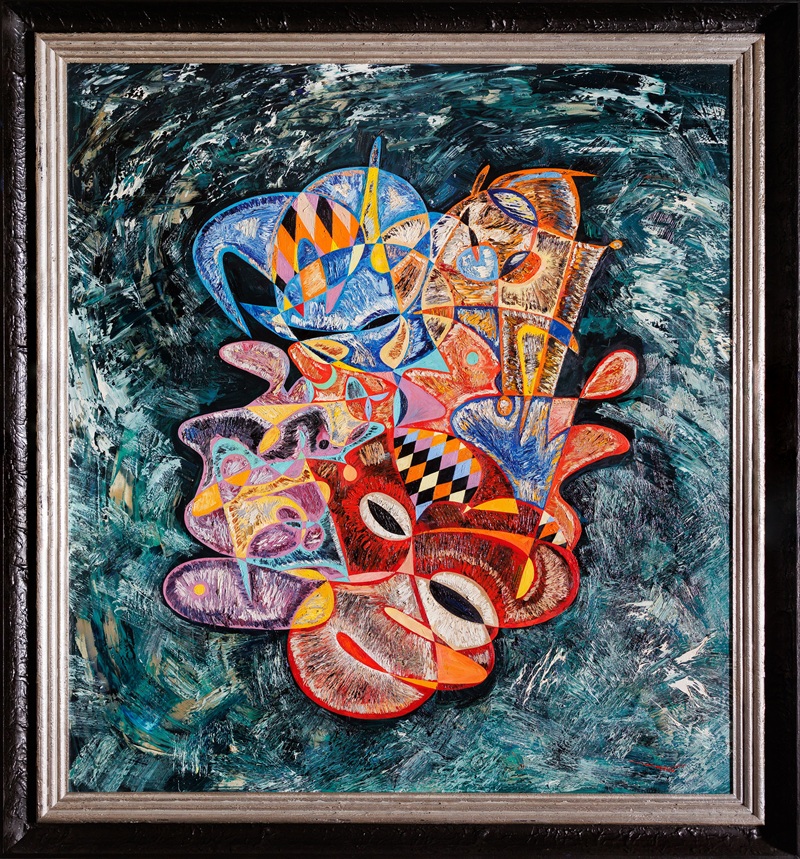 Twin Clowns: Venice by Gheorghe Virtosu
Representation Status
Available for Representation